People are fleeing Rashedie. Refugees turned into to refugees again, and where do you go when you have nowhere to go?
How are you sorry because I late to write to u I'm in Tripoli now with my father , Amal, and Hussein my other family on Saida we came on Tuesday during the armistice we are displaced now……………… we are scared from invasion , I trust on Hezbollah they will win enshallah. Israel warining the suburb of Tyre so they want more massacre. Why not no one blame them They want to said that they don't lose but they are .and they killed innocent not Hezbollah ……… it's not fair
Lebanon so sad now I stayed 8 hours from Rachidiah to Tripoli the road are cutting peoples tramped ……. Destruction every where they attack Rachidaiah near to the oven and closed to center and 2 other place . by rocket but alhadolleah it doesn't explode where killed because the houses where full in small kids and aged people the kids who injured here from the center I'am so sad about them but they are ok now . the situation is so sad here. People on south of Lebanon under the blockade are sick (mange) they don't find water or food to eat. Everyday I cry and I feel that I should do some thing I miss to my family and friend's aim sick know from sad I have pain on my foot and stomach. Every people here are worry about things became better I will try to buy phone. I will tell u later and give u the number
I will tell u later take care
Bye bye
Manal
Tuesday, August 08, 2006


Sunday, July 30, 2006
The Easiest Thing You Could Do
Sign the petition against the killing and massacres of Lebanese civilians.
Please. How can we just sit here and watch?

219079 have signed so far.
Make your voice heard.
Pass it on, send it to everyone you know.
Please. How can we just sit here and watch?
219079 have signed so far.
Make your voice heard.
Pass it on, send it to everyone you know.
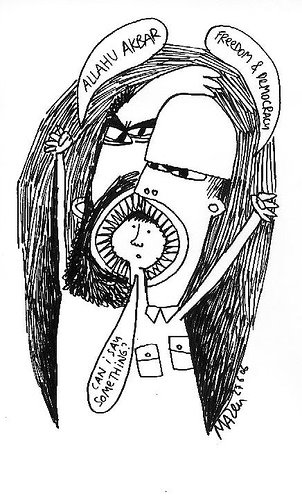
Freedom Flag and United Nothing

 the voice of wisdom
"i do not understand, the united nations, they are united with whom and against whom?"
my father today.
(Mazen Kerbaj)
Some People
Some people flee some other people.
In some country under a sun
and some clouds.
They abandon something close to all they've got,
sown fields, some chickens, dogs,
mirrors in which fire now preens.
Their shoulders bear pitchers and bundles.
The emptier they get, the heavier they grow.
What happens quietly: someone's dropping from exhaustion.
What happens loudly: someone's bread is ripped away,
someone tries to shake a limp child back to life.
Always another wrong road ahead of them,
always another wrong bridge
accross an oddly reddish river.
Around them, some gunshots, now nearer, now farther away,
above them a plane seems to circle.
Some invisibility would come in handy,
some grayish stoniness,
or, better yet, some nonexistence
for a shorter or a longer while.
Something else will happen, only where and what.
Someone will come at them, only when and who,
in how many shapes, with what intentions.
If he has a choice,
maybe he won't be the enemy
and will let them live some sort of life.
Wislawa Szymborska,
Polish poet
 LIFE
LIFE
of the city of tyr today:
40 wooden numbered boxes to move home from the city of tyr to under the city of tyr.
40.
Mazen Kerbaj,
kerblog
In some country under a sun
and some clouds.
They abandon something close to all they've got,
sown fields, some chickens, dogs,
mirrors in which fire now preens.
Their shoulders bear pitchers and bundles.
The emptier they get, the heavier they grow.
What happens quietly: someone's dropping from exhaustion.
What happens loudly: someone's bread is ripped away,
someone tries to shake a limp child back to life.
Always another wrong road ahead of them,
always another wrong bridge
accross an oddly reddish river.
Around them, some gunshots, now nearer, now farther away,
above them a plane seems to circle.
Some invisibility would come in handy,
some grayish stoniness,
or, better yet, some nonexistence
for a shorter or a longer while.
Something else will happen, only where and what.
Someone will come at them, only when and who,
in how many shapes, with what intentions.
If he has a choice,
maybe he won't be the enemy
and will let them live some sort of life.
Wislawa Szymborska,
Polish poet
 LIFE
LIFEof the city of tyr today:
40 wooden numbered boxes to move home from the city of tyr to under the city of tyr.
40.
Mazen Kerbaj,
kerblog
Friday, July 28, 2006
Kerblog
In the series "The World is Mad and Silje is lost for Words" (I really am and that sucks), let me continue my recommendations of other resources on the net that phrase the madness going on far better than I am able to at the moment . As you can see I've added some links on the right and re-organized them a bit, updates will follow.
In particular I want to point out the Lebanse artist (comic author, painter and musician) Mazen Kerbaj's Kerblog, created as a direct result of the attack on Lebanon, quote:
Kerbaj's pieces of art are brilliant. Despair, humour and perseverance mixed in drawings that portray today's Lebanon better than any words. Check it out.

In particular I want to point out the Lebanse artist (comic author, painter and musician) Mazen Kerbaj's Kerblog, created as a direct result of the attack on Lebanon, quote:
bang? blog!
2 years of lazyness before starting this blog.
i'll begin then by thanking israel who burned in one night two years of efforts to avoid getting myself trapped in this adventure. good job guys! especially the airport party. and the bridges. no way to leave the country. nothing else to do than this blog.
after all, we all need sometimes a valid reason to start to work, and a good old war soundscape is ok as a starting point.
(Kerbaj's first blog post)
Kerbaj's pieces of art are brilliant. Despair, humour and perseverance mixed in drawings that portray today's Lebanon better than any words. Check it out.
Tuesday, July 25, 2006
They bombed Rashedie
They bombed Rashedie. They bombed the bakery just next to Balsam hospital in the camp, one killed, five hurt. Twenty thousand terrified. What have they done? What justifies the bombing? Nothing. They have done nothing wrong and nothing justifies a bomb, least of all one against civilians.
Rashedie is - as opposed to many other Palestinian refugee camps in Lebanon - a strictly PLO-governed camp. There are two checkpoints on the road into the camp that everybody must pass, one Lebanese and one Palestinian. Contrary to other camps in Lebanon, such as for example Bourj el Barajne in Beirut, which is open on all sides, this means that it is possible to keep more or less absolute control with all movement in and out of the camp. As prison-like this feature makes Rashedie in everyday-life, one would think that it would be a good thing in times when Hizbollah is the target no 1 of the IDF: everybody knows that Hizbollah has nothing to do with Rashedie. PLO has absolute control. This is underlined by the fact that more than 600 Lebanese have fled into Rashedie as they consider the camp a lot safer than anywhere else in the south.
Still, they bombed the camp too.
Why targeting a bakery in a refugee camp?
I don't know. But I think it makes it pretty clear that the real aim of this war is about alot more than crushing Hizbollah.
I'm lost for words, I really don't know what to say. So instead I will encourage you to read my friend Maria's new Rashedie-blog here. The blog is a diary from Rashedie in the form of sms messages and emails from Ashraf, a 25-year old friend from the camp. He works at the bakery that was bombed.
Other accounts of the situation of the Palestinians in Lebanon now can be found here ('Another Generation of Palestinian Refugees in Lebanon comes under Fire') and here ('Didn't you watch the News? They started hitting Palestinians'), both from Electronic Lebanon.
Rashedie is - as opposed to many other Palestinian refugee camps in Lebanon - a strictly PLO-governed camp. There are two checkpoints on the road into the camp that everybody must pass, one Lebanese and one Palestinian. Contrary to other camps in Lebanon, such as for example Bourj el Barajne in Beirut, which is open on all sides, this means that it is possible to keep more or less absolute control with all movement in and out of the camp. As prison-like this feature makes Rashedie in everyday-life, one would think that it would be a good thing in times when Hizbollah is the target no 1 of the IDF: everybody knows that Hizbollah has nothing to do with Rashedie. PLO has absolute control. This is underlined by the fact that more than 600 Lebanese have fled into Rashedie as they consider the camp a lot safer than anywhere else in the south.
Still, they bombed the camp too.
Why targeting a bakery in a refugee camp?
I don't know. But I think it makes it pretty clear that the real aim of this war is about alot more than crushing Hizbollah.
I'm lost for words, I really don't know what to say. So instead I will encourage you to read my friend Maria's new Rashedie-blog here. The blog is a diary from Rashedie in the form of sms messages and emails from Ashraf, a 25-year old friend from the camp. He works at the bakery that was bombed.
Other accounts of the situation of the Palestinians in Lebanon now can be found here ('Another Generation of Palestinian Refugees in Lebanon comes under Fire') and here ('Didn't you watch the News? They started hitting Palestinians'), both from Electronic Lebanon.
Tuesday, July 18, 2006
Some have War, Some have Cookies
There are so many parallel worlds in our little world. How do you switch from one to another? You can take a plane and make the switch in a matter of hours, just like that, but the real distance travelled doesn't leave you as easily. It stays with you for a long time, at times making you numb, at times absorbing the past into the here-and-now, the distance into the immediate, making time and space more relative than you thought possible, confusing your sense of reality. At times leaving you in a bubble it's hard to get out of, it is more likely than not you ask yourself where am I really? And there's no clear-cut answer.
You have to work hard in order for it not to distance you from yourself.
No matter where you go, there you are.
- But not always so.
My stay in Barcelona is slowly coming to an end, and even though Barcelona truly is a wonderful city I am more than happy about the fact that I'm leaving tomorrow. Home!
Home is a place where you're free from the exhausting need to explore everything around. Where you're left only with the task of coming to terms with the distances that have settled in your heart, a condition that, like every experience that makes you grow, is both rewarding and painful.
How can I wander around in Barcelona and enjoy life when I know that my friends are being bombed? When I know that people get killed and suffer on a large scale while the UN Security Council decides to postpone the meeting aimed to produce some kind of solution to the horror going on? (Great idea, postpone it, that will make it all alot more easier. Fucking super power ego trips.) How do I cope with the ignorance all around? How do you come to terms with the fact that you are in this beautiful sorrow free world in the world while there's another one existing parallel to it that is filled with death, fear and horror? How can you just close your eyes and be happy?
You can't.
And you shouldn't.
But you can't just sit there and cry either. (What good would that do?)
A memory from Rashedie comes to mind.
It was March 20, 2003, Amira's birthday and the day that the US decided to invade Iraq. Gro and me found ourselves in Amira's kitchen, making cinnamon rolls in honour of the birthday princess. The war was on everybody's lips and on everybody's minds, allah o-akhbar filled the streets, grandmothers cried, and the sense of fear was omnipresent. Still, we were laughing while the smell of almost-done cinnamon rolls from the small oven filled our hearts, and the war was as yet far away. "Some have war and some have cookies," Amira said, in a loving tone of voice that couldn't do anything but make you smile. Her insight was unmistakable: there is suffering and there is happiness. Coming from someone who has witnessed more horror than I will ever be able to grasp, her statement was all the more revealing. You just have to acknowledge it; the world is not fair. Eat your cookies when you can, preserve the good times in your heart, store it there, let love in whenever you encounter it, and then take it out and use it to fight when you have to. There is a time for everything, and it doesn't help Rashedie that I sit in Barcelona and cry.
Still, I do.
I can't help it.
You have to work hard in order for it not to distance you from yourself.
No matter where you go, there you are.
- But not always so.
My stay in Barcelona is slowly coming to an end, and even though Barcelona truly is a wonderful city I am more than happy about the fact that I'm leaving tomorrow. Home!
Home is a place where you're free from the exhausting need to explore everything around. Where you're left only with the task of coming to terms with the distances that have settled in your heart, a condition that, like every experience that makes you grow, is both rewarding and painful.
How can I wander around in Barcelona and enjoy life when I know that my friends are being bombed? When I know that people get killed and suffer on a large scale while the UN Security Council decides to postpone the meeting aimed to produce some kind of solution to the horror going on? (Great idea, postpone it, that will make it all alot more easier. Fucking super power ego trips.) How do I cope with the ignorance all around? How do you come to terms with the fact that you are in this beautiful sorrow free world in the world while there's another one existing parallel to it that is filled with death, fear and horror? How can you just close your eyes and be happy?
You can't.
And you shouldn't.
But you can't just sit there and cry either. (What good would that do?)
A memory from Rashedie comes to mind.
It was March 20, 2003, Amira's birthday and the day that the US decided to invade Iraq. Gro and me found ourselves in Amira's kitchen, making cinnamon rolls in honour of the birthday princess. The war was on everybody's lips and on everybody's minds, allah o-akhbar filled the streets, grandmothers cried, and the sense of fear was omnipresent. Still, we were laughing while the smell of almost-done cinnamon rolls from the small oven filled our hearts, and the war was as yet far away. "Some have war and some have cookies," Amira said, in a loving tone of voice that couldn't do anything but make you smile. Her insight was unmistakable: there is suffering and there is happiness. Coming from someone who has witnessed more horror than I will ever be able to grasp, her statement was all the more revealing. You just have to acknowledge it; the world is not fair. Eat your cookies when you can, preserve the good times in your heart, store it there, let love in whenever you encounter it, and then take it out and use it to fight when you have to. There is a time for everything, and it doesn't help Rashedie that I sit in Barcelona and cry.
Still, I do.
I can't help it.
Monday, July 17, 2006
Letter from Manal
Manal is one of my best friends. She lives in Rashedie, the southernmost Palestinian refugee camp in Lebanon, just south of the city Tyre (called Soor in Arabic) and only kilometres away from the Israeli border. The camp is surrounded by orange trees, green fields and a beautiful beach - a stark contrast to the ugly reality of the 20.000 people living there, who is stripped of virutally every right you can think of, ranging from the right to citizenship, to the right of fixing a leaking roof, to being allowed to work as a taxi driver, not to mention a doctor or a lawyer. Fleeing Palestine during the war of 1947-1949, the Palestinians in Lebanon believed they would be able to return to their homes after some days, or some weeks at most. 58 years have passed, and they are still there, with the key to their houses in hand and with their future lying shattered around. Most of them living in one of 12 official refugee camps in Lebanon, they now number about 400.000, that is 10% of the population.
As Norwegians and other privileged western citizens are being evacuated from Lebanon on a large scale and unfortunate Lebanese inhabitants are desperately trying to flee the country, the Palestinians in Lebanon are already refugees with nowhere to go. They know their situation all too well; they have seen it before. With no passports and nowhere to go they are stuck in their camps, and they can only hope and pray that Israel will not destroy them completely, that they will be allowed access to enough food and water to survive and that the bombs will not hit their families.
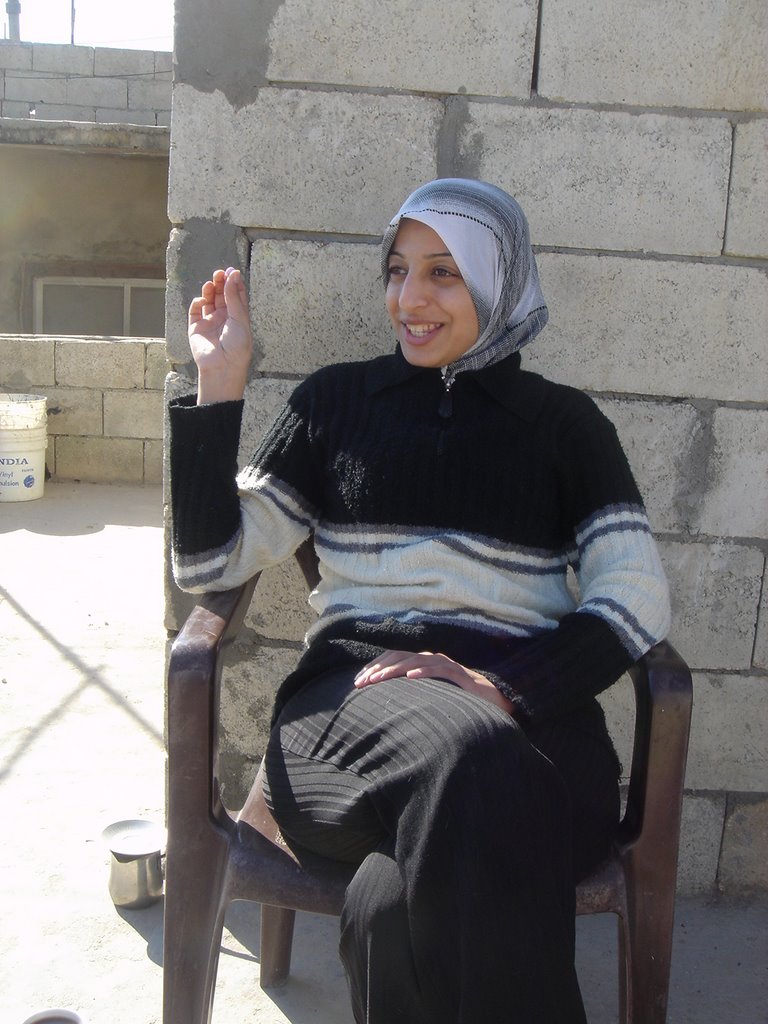
 Manal on her roof in Rashedie, where we used to sit and talk and laugh for hours on end, eat bizr (small seeds of different kinds) and drink arabic coffee. Manal is a true friend. Her name means Hope, and I do believe that it's people like her who represent the hope of this world. Stay strong Manal! I think of you, and I pray that this madness will come to an end. I wish I could do more than pray, but maybe by writing these lines one or two more will care, and maybe if one or two more cared each day then we would eventually gather enough power to end this injustice and the cruel cycle of violence it creates.
The following is an excerpt from an email I got from her yesterday.
it's really so bad situation here every where isreall is attack by planes and everything, last day no one slept here on Raschediah, all village next to us attacked by israel and the kids and old people afriad and sick it's really so hard we saw the planes (...)
people searching about food and safe place (even if isreall said that there is no safe place every thing maybe will happened every place)
iam not worry about my self but there is really people cann't stay like this to along time we cann't go outside camp and visiting each other and the bad thngs to me that my 2 brothers sherif and osama is on place next to saida and they cann't camp, we all worry they call us yesterday and the are good ........... till know
the dead people all of them from old peaple , womens .kids
(...)
i have to go know
it's not good to dead far of you house
plz pray to us
and say hi to all your family
sorry for my bad dictation the planse know above rachdeih it attak tyre (soor)
don't forget me
manal
As Norwegians and other privileged western citizens are being evacuated from Lebanon on a large scale and unfortunate Lebanese inhabitants are desperately trying to flee the country, the Palestinians in Lebanon are already refugees with nowhere to go. They know their situation all too well; they have seen it before. With no passports and nowhere to go they are stuck in their camps, and they can only hope and pray that Israel will not destroy them completely, that they will be allowed access to enough food and water to survive and that the bombs will not hit their families.
 Manal on her roof in Rashedie, where we used to sit and talk and laugh for hours on end, eat bizr (small seeds of different kinds) and drink arabic coffee. Manal is a true friend. Her name means Hope, and I do believe that it's people like her who represent the hope of this world. Stay strong Manal! I think of you, and I pray that this madness will come to an end. I wish I could do more than pray, but maybe by writing these lines one or two more will care, and maybe if one or two more cared each day then we would eventually gather enough power to end this injustice and the cruel cycle of violence it creates.
The following is an excerpt from an email I got from her yesterday.
it's really so bad situation here every where isreall is attack by planes and everything, last day no one slept here on Raschediah, all village next to us attacked by israel and the kids and old people afriad and sick it's really so hard we saw the planes (...)
people searching about food and safe place (even if isreall said that there is no safe place every thing maybe will happened every place)
iam not worry about my self but there is really people cann't stay like this to along time we cann't go outside camp and visiting each other and the bad thngs to me that my 2 brothers sherif and osama is on place next to saida and they cann't camp, we all worry they call us yesterday and the are good ........... till know
the dead people all of them from old peaple , womens .kids
(...)
i have to go know
it's not good to dead far of you house
plz pray to us
and say hi to all your family
sorry for my bad dictation the planse know above rachdeih it attak tyre (soor)
don't forget me
manal
Sunday, July 16, 2006
War Dream
 I dreamt war last night. I have never been in a real war situation, but now I still know a little bit what it feels like. Strange how dreams can teach you about feelings you've never had.
There were bombs everywhere. I saw houses get hit by rockets. They burnt. People ran. I wondered how many were inside the burning houses. I had an amazingly clear understanding of the fact that it could as well have been me inside those houses. I ran. Everybody ran, and there was nowhere to go. This all-consuming feeling: imminent and unavoidable danger and no escape. The one thing I knew for sure was that there was not a single safe place around. Nowhere to hide. You could only run, and hope and pray that nothing hit you.
I can still vividly recall the feeling, that desperate and inescapable fear.
I read the news, 18 civilian Lebanese killed today as they fled their village (on the command of Israel, who said the whole village would be demolished unless they left immediately), southern suburbs of Beirut bombed (what about the Palestinian refugee camps in the area? Bourj el-Barajne? Sabra and Chatila? Are they ok?), a gas station near the Palestininan refugee camp Ein el-Helwe in Saida set on fire, and so forth and so on, I read the news, I see the pictures of unimaginable destruction, the videos of rockets falling and setting things on fire, and I remember all too well that nightmare feeling of desperate and inescapable fear.
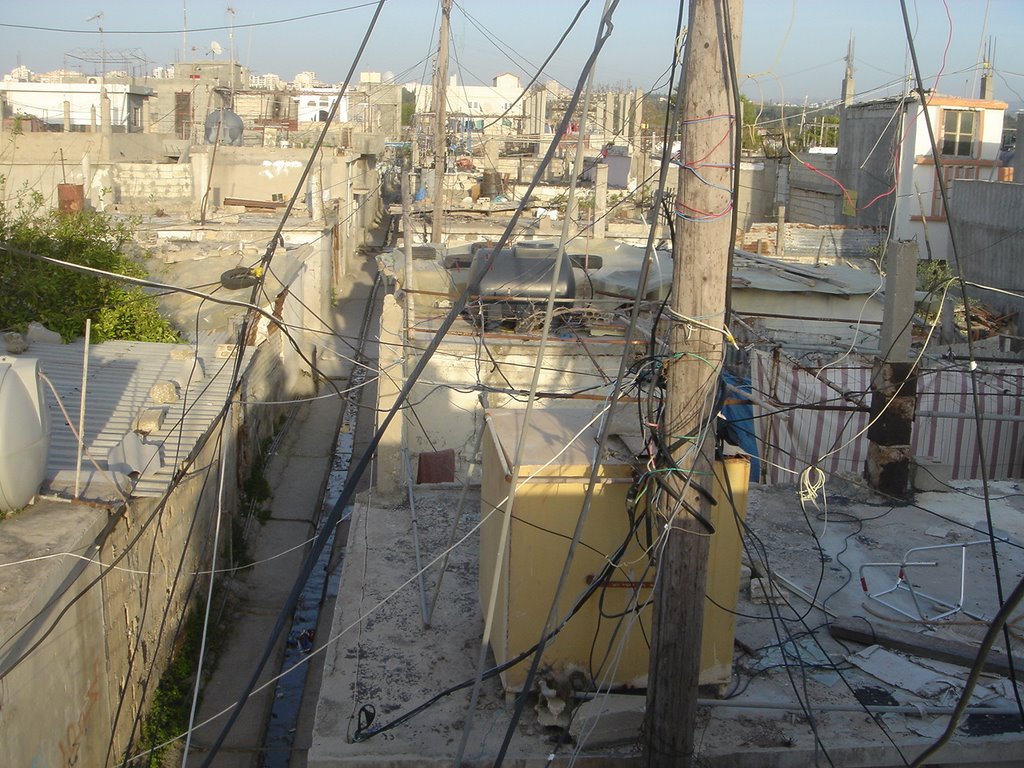 I can cope with that fear - I could just wake up. Easy as that. Wake up, and realize you are safe and sound in a peaceful European city full of tapas and music. And then you go to a fancy conference, drink your coffee with Important Scholars who talk enthusiastically and in a way too happy voice about the Psychology of Terrorism even though they have never set their foot anywhere near the hell the Palestinians are living through. "I have some interesting contacts, I even know a man who went to Gaza once! And the Shin Bet will maybe help us finance the project! This kind of research has never been done before, it's so great!" Well fuck you, go there yourself and maybe you will understand some of the Psychology you pretend to know so well, and then maybe you will stop talk about Terrorism and instead start concentrate on justice.
(I wish I had said that to this completely ignorant American professor - who even explicitly admitted he was completely ignorant after I told him some facts about Palestinian life - "Oh you are so knowledgable, I had no idea! It's so great meeting people like you who know about these things!" - and then he ended the conversation and was not the least interested to know more.)
I woke up, and I'm safe. It tears me apart knowing that millions of people cannot wake up, that they just have to life through it, if they stay alive at all.
I talked to my friend Mohammed in Rashedie on MSN yesterday, and I asked him how things were.
"We are listening to the music of shooting," he said.
And I cried.
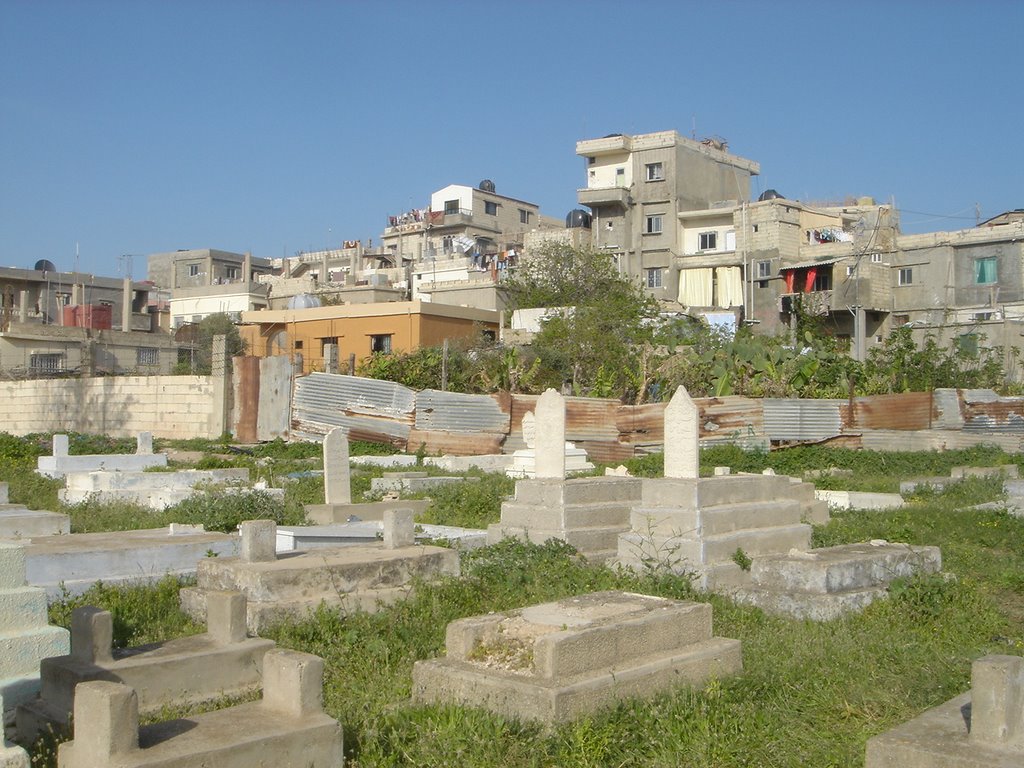
(Photos from Rashedie, taken by me in March 2005)
Thursday, July 13, 2006
Scream and Prayer
So we just have to realize the facts: there is a war in Lebanon. Outrageous violations are taking place while the whole world is watching, and the US is for the zillionth time using its veto power in the Security Council to make sure that no end is put to the horror unfolding in front of our eyes (God forbid!).
As if the blood bath i Gaza was not enough.
I refuse!
I refuse to be a part of a world that let this happen, over and out, end of story!
I scream out my refusal so loud that all the windows in Barcelona break. And through the broken windows my scream penetrates the evening quiet of the living rooms and the silence of the hallways and the traffic in the streets and the slowliness of grandparents' bed time stories and the quirking of old elevators and the dinner table conversations and the bedroom quarrels and the laughter of couples in love and the sound of shutting doors and the music in the bars and the cries of babies in hunger and it's impossible to hear what they say on TV and people who have just fallen asleep wake up and can't tell what they were dreaming and the professors sitting in their hotel rooms preparing for tomorrow's panel sessions can't concentrate and everybody is covering their ears with their hands while glass lie shattered around and there is no end in sight to this unbearable sound.
And yet nothing is heard.
I feel utterly helpless and I wish I had some magic recipe that could make all the people of the world unite and join a massive uprising that could show the super powers of this world that we all refuse to be a part of this, that we all refuse to watch these endless crimes, that we all refuse to be silent.
Instead all I can do is silently open the window and go to sleep in my Barcelona bed, listen to the silent buzz of the fan and pray that not too many get killed tonight.
(I pray, even though I do not believe there is a god.
Like all desperate people, I too
place my hope in something more promising
than human behavior, forgetting
that there is
no such thing.)

As if the blood bath i Gaza was not enough.
I refuse!
I refuse to be a part of a world that let this happen, over and out, end of story!
I scream out my refusal so loud that all the windows in Barcelona break. And through the broken windows my scream penetrates the evening quiet of the living rooms and the silence of the hallways and the traffic in the streets and the slowliness of grandparents' bed time stories and the quirking of old elevators and the dinner table conversations and the bedroom quarrels and the laughter of couples in love and the sound of shutting doors and the music in the bars and the cries of babies in hunger and it's impossible to hear what they say on TV and people who have just fallen asleep wake up and can't tell what they were dreaming and the professors sitting in their hotel rooms preparing for tomorrow's panel sessions can't concentrate and everybody is covering their ears with their hands while glass lie shattered around and there is no end in sight to this unbearable sound.
And yet nothing is heard.
I feel utterly helpless and I wish I had some magic recipe that could make all the people of the world unite and join a massive uprising that could show the super powers of this world that we all refuse to be a part of this, that we all refuse to watch these endless crimes, that we all refuse to be silent.
Instead all I can do is silently open the window and go to sleep in my Barcelona bed, listen to the silent buzz of the fan and pray that not too many get killed tonight.
(I pray, even though I do not believe there is a god.
Like all desperate people, I too
place my hope in something more promising
than human behavior, forgetting
that there is
no such thing.)

Wednesday, July 12, 2006
Barcelona, Academia, Madness
So, after going through some paranoid, rude and arrogant interrogations at the airport in Tel Aviv (where everybody is a terrorist unless otherwise is proved), two nice fligths, a relaxing weekend with my love and his family in Moss and a dizzy Monday in Amsterdam I now find myself in Barcelona. Ana's Guesthouse turned out to be a good choice, and I am trying my best to erase the inconceivable and inexplicable distances I've travelled lately from my mind and focus on the here and the now.
And so what is the here and the now? Apart from the Bangkok-like heat in the streets at noon and the cool and soothing beer in the tapas bars after dinner, it consists of trying out the intellectual game of poster sessions, champagne, roundtables and networking. Thanks to SEMUT who gave me a nice master's grant I was able to come here and attend the International Society for Political Psychology's (ISPP) Annual Meeting, this year bearing the heavy (and one would think promising?) title The Political Psychology of Oppression, The Political Psychology of Liberation. Ah! Oppression and Liberation. It's pretty clear to me that the world suffers from a severe and acute lack of understanding of these issues and that giving them some serious consideration therefore would be nothing but a positive contribution to the status quo.
Even so, I am starting to realize that being an informed and well trained academic, a successful social scientist even, does not by any means inhibit you from having rather extreme opinions. I also realize how naive I was in thinking this way, believing that if people only are well educated they will for sure also hold educated attitudes... it has dawned on me lately how terribly wrong this rather childish assumption is, but even so, knowing that academia does not equal wisdom, I got so shocked at the conference today that it felt like my head would collapse, fall off my neck and bump around on the ground like an abandoned football and then be lost in some dusty corner.
This is what happened. At lunch I went to a café and sat down with my laptop, checking up on the news. And so I learnt that Israel is just about to invade Lebanon too, as if Gaza was not hell enough. Thinking about Manal, Ibrahim, Amira and all my other friends who are stuck in Rashedie (a Palestinian refugee camp) in southern Lebanon I had a hard time finishing my lunch. What will happen to them? How long will it take before Israeli tanks moves past the Lebanese entrance checkpoint and into the camp? Will they be bombed? Will they survive? How much blood must be spilt before the world starts to care? Will the world ever care? And what the hell can you do?
Fuck! (Don't know what else to say really.)
Well, these were the thoughts in my head as I headed for the first afternoon session at the conference, amptly entitled "Strategies and Elements in War and Peace Processes". After some blablabla talk on peace, reconciliation and justice (the latter presented as a possible obstacle to the former)(...!), there came the time for the paper named "The Psychology of Counterterrorism: the Israeli Misuse of Strategic Assassinations". Aha! I thought, and I have to admit I was quite excited about it, curious what this Arthur Honig would tell us. Finally somebody who would criticise some of the madness going on!
Well - and this is where the shock comes into the story - I couldn't have been more wrong. In fact, I was so wrong I really had trouble following what he said in the beginning, as my ears simply refused to believe what they heard. (This is really true, for a long time I sat there being completely sure that I somehow misunderstood it all.) True, Mr. Honig (who, off the record, both looked and behaved like a rather unfortunate edition of George from the Seinfeld series), talked about the Israeli Misuse of Strategic Assassinations just like his paper title suggested he would. But what he had to say about it ran contrary to anything one would expect from a serious scientist: his aim was to show how Israel more often than not assassinated Palestinians (or 'terrorist leaders', of course) at the wrong time, in the wrong way and in the wrong place. The misuse of strategic assassinations: the conduct of assassinations in too childish and too obvious ways. Point being; they are not strategic enough! The state of Israel should plan their actions more carefully and not be so open about their crimes. In that way they would be far more successful in their operations! Alas, his point was not that assassinations are bad (he didn't even consider that option for a second, and explicitly admitted it on top of it all), but that they should be carried out in much more cleverer, more subtle and more invisible ways.
Seriously!!!!
This man is a graduate student in the Department of Political Science at the University of California - Los Angeles. His paper has been accepted to one of most serious conferences in the field of social science, and he presents his views in the name of scientific research.
What happened to the ethical standards that are supposed to be guiding principles of all research? How can anyone be allowed to conduct research that has as its explicit aim to find out how strategic assassinations can be more strategic? So that more people can get killed without it having to look so ugly? And howcome his 'research' was not rejected by the ISPP in the first place? Are there absolutely NO moral standards guiding the world of 'educated intellectuals'? What the hell is academia good for if this is how you can use it?
True, there was a heated discussion afterwards, where Mr. Honig was angrily attacked by several professors pointing to the missing ethics of his research. This does not help much though, especially when taking his response into consideration: his research had in fact a 'good aim', namely to "make the Israeli strategies of survival more successful - so that more lives can be spared".
I wonder how that relates to the terrified civilians in Rashedie and in Gaza, who have their homes bombed as we speak.
So much for the insights on oppression and liberation, I don' know, maybe I'll just quit this academic shit and do something more useful.
And so what is the here and the now? Apart from the Bangkok-like heat in the streets at noon and the cool and soothing beer in the tapas bars after dinner, it consists of trying out the intellectual game of poster sessions, champagne, roundtables and networking. Thanks to SEMUT who gave me a nice master's grant I was able to come here and attend the International Society for Political Psychology's (ISPP) Annual Meeting, this year bearing the heavy (and one would think promising?) title The Political Psychology of Oppression, The Political Psychology of Liberation. Ah! Oppression and Liberation. It's pretty clear to me that the world suffers from a severe and acute lack of understanding of these issues and that giving them some serious consideration therefore would be nothing but a positive contribution to the status quo.
Even so, I am starting to realize that being an informed and well trained academic, a successful social scientist even, does not by any means inhibit you from having rather extreme opinions. I also realize how naive I was in thinking this way, believing that if people only are well educated they will for sure also hold educated attitudes... it has dawned on me lately how terribly wrong this rather childish assumption is, but even so, knowing that academia does not equal wisdom, I got so shocked at the conference today that it felt like my head would collapse, fall off my neck and bump around on the ground like an abandoned football and then be lost in some dusty corner.
This is what happened. At lunch I went to a café and sat down with my laptop, checking up on the news. And so I learnt that Israel is just about to invade Lebanon too, as if Gaza was not hell enough. Thinking about Manal, Ibrahim, Amira and all my other friends who are stuck in Rashedie (a Palestinian refugee camp) in southern Lebanon I had a hard time finishing my lunch. What will happen to them? How long will it take before Israeli tanks moves past the Lebanese entrance checkpoint and into the camp? Will they be bombed? Will they survive? How much blood must be spilt before the world starts to care? Will the world ever care? And what the hell can you do?
Fuck! (Don't know what else to say really.)
Well, these were the thoughts in my head as I headed for the first afternoon session at the conference, amptly entitled "Strategies and Elements in War and Peace Processes". After some blablabla talk on peace, reconciliation and justice (the latter presented as a possible obstacle to the former)(...!), there came the time for the paper named "The Psychology of Counterterrorism: the Israeli Misuse of Strategic Assassinations". Aha! I thought, and I have to admit I was quite excited about it, curious what this Arthur Honig would tell us. Finally somebody who would criticise some of the madness going on!
Well - and this is where the shock comes into the story - I couldn't have been more wrong. In fact, I was so wrong I really had trouble following what he said in the beginning, as my ears simply refused to believe what they heard. (This is really true, for a long time I sat there being completely sure that I somehow misunderstood it all.) True, Mr. Honig (who, off the record, both looked and behaved like a rather unfortunate edition of George from the Seinfeld series), talked about the Israeli Misuse of Strategic Assassinations just like his paper title suggested he would. But what he had to say about it ran contrary to anything one would expect from a serious scientist: his aim was to show how Israel more often than not assassinated Palestinians (or 'terrorist leaders', of course) at the wrong time, in the wrong way and in the wrong place. The misuse of strategic assassinations: the conduct of assassinations in too childish and too obvious ways. Point being; they are not strategic enough! The state of Israel should plan their actions more carefully and not be so open about their crimes. In that way they would be far more successful in their operations! Alas, his point was not that assassinations are bad (he didn't even consider that option for a second, and explicitly admitted it on top of it all), but that they should be carried out in much more cleverer, more subtle and more invisible ways.
Seriously!!!!
This man is a graduate student in the Department of Political Science at the University of California - Los Angeles. His paper has been accepted to one of most serious conferences in the field of social science, and he presents his views in the name of scientific research.
What happened to the ethical standards that are supposed to be guiding principles of all research? How can anyone be allowed to conduct research that has as its explicit aim to find out how strategic assassinations can be more strategic? So that more people can get killed without it having to look so ugly? And howcome his 'research' was not rejected by the ISPP in the first place? Are there absolutely NO moral standards guiding the world of 'educated intellectuals'? What the hell is academia good for if this is how you can use it?
True, there was a heated discussion afterwards, where Mr. Honig was angrily attacked by several professors pointing to the missing ethics of his research. This does not help much though, especially when taking his response into consideration: his research had in fact a 'good aim', namely to "make the Israeli strategies of survival more successful - so that more lives can be spared".
I wonder how that relates to the terrified civilians in Rashedie and in Gaza, who have their homes bombed as we speak.
So much for the insights on oppression and liberation, I don' know, maybe I'll just quit this academic shit and do something more useful.
Monday, July 10, 2006
Jerusalem Souvenirs
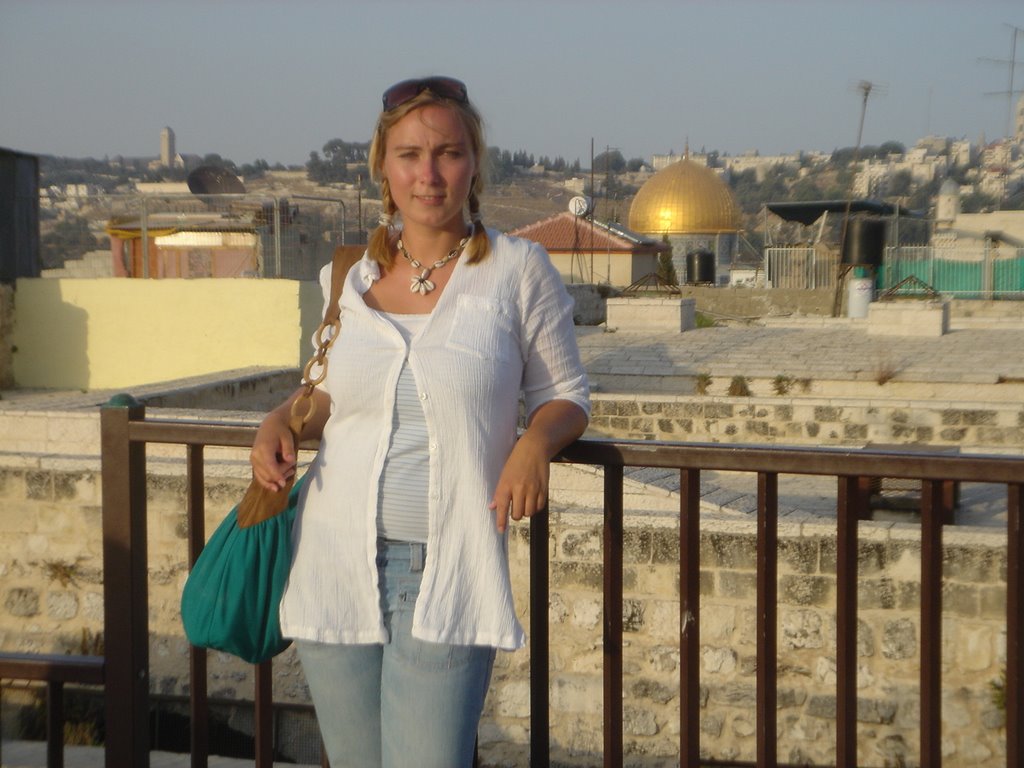 On the roof of the Old City. The magnificent Dome of the Rock in the background. Not visible in the picture is an illegal Israeli settlement on my left.
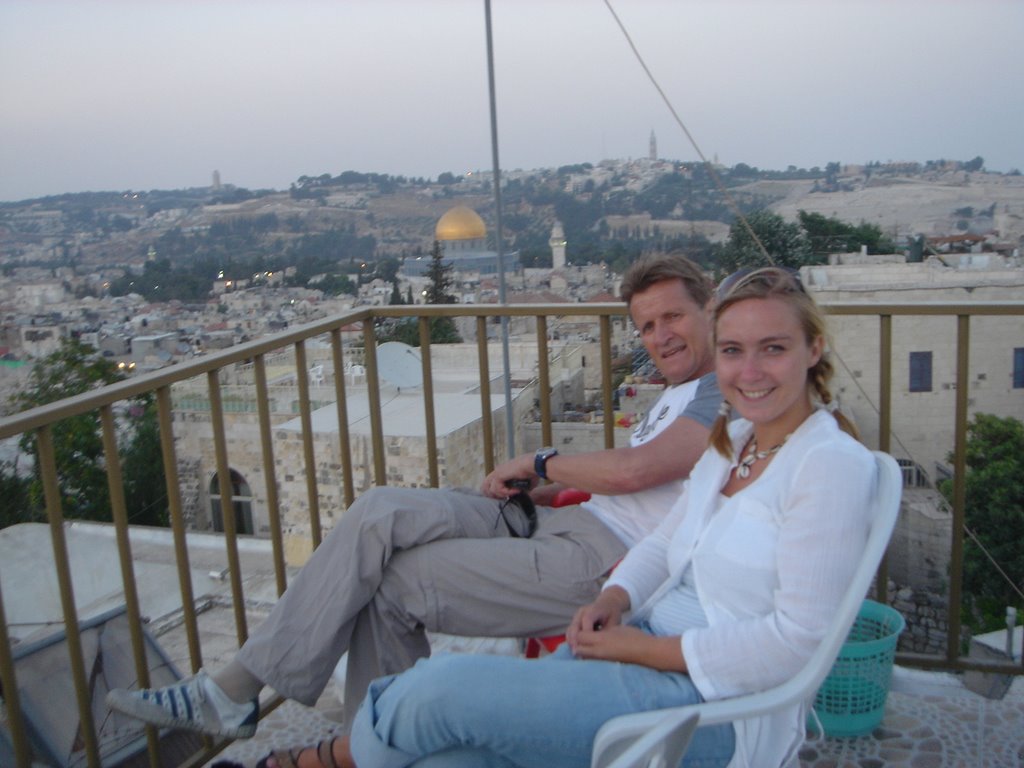 Mads and me on the roof of my hostel.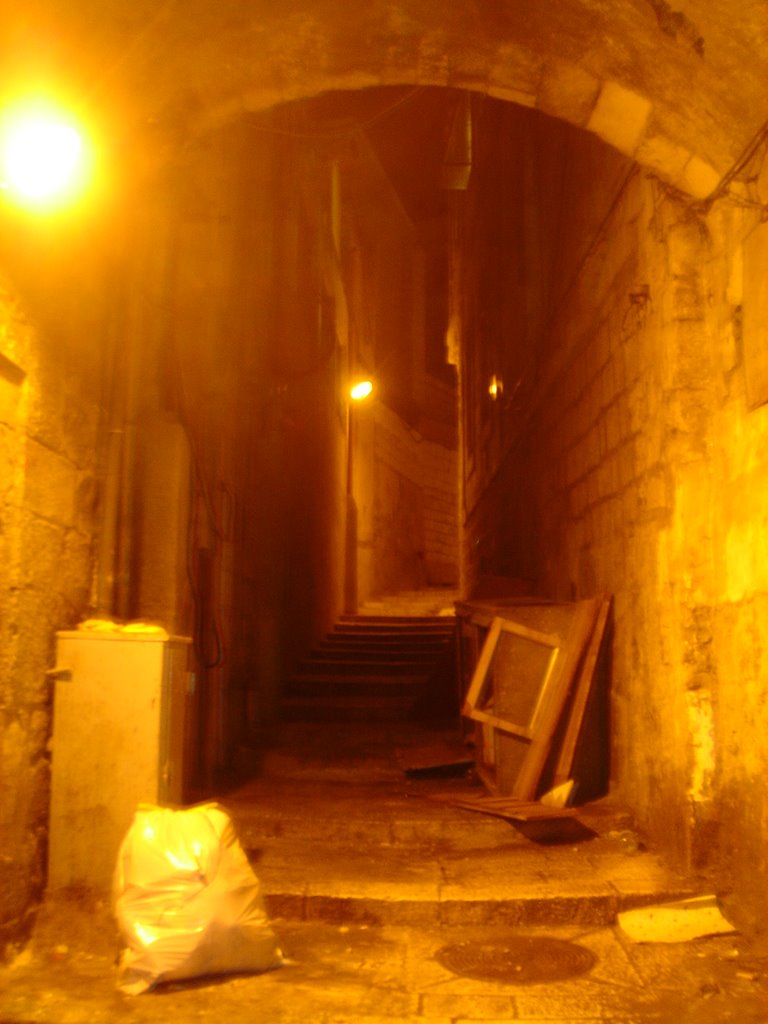
The Old City by night.
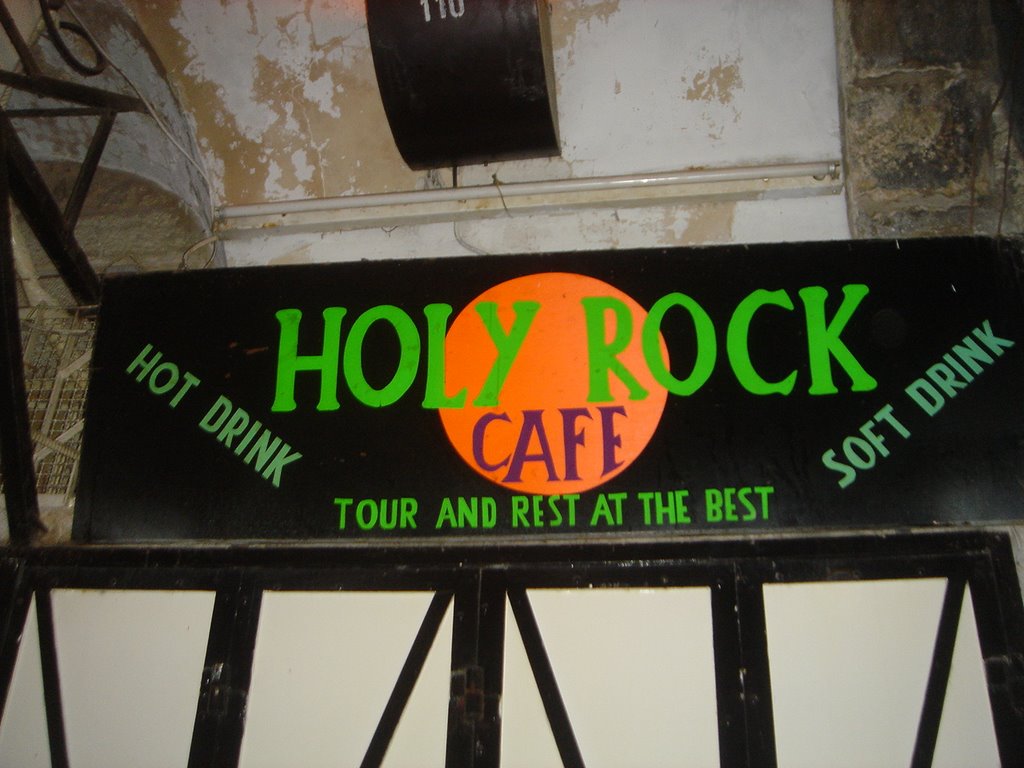
Hot drink. Soft drink. Tour and rest at the best. Holy Rock has it all!
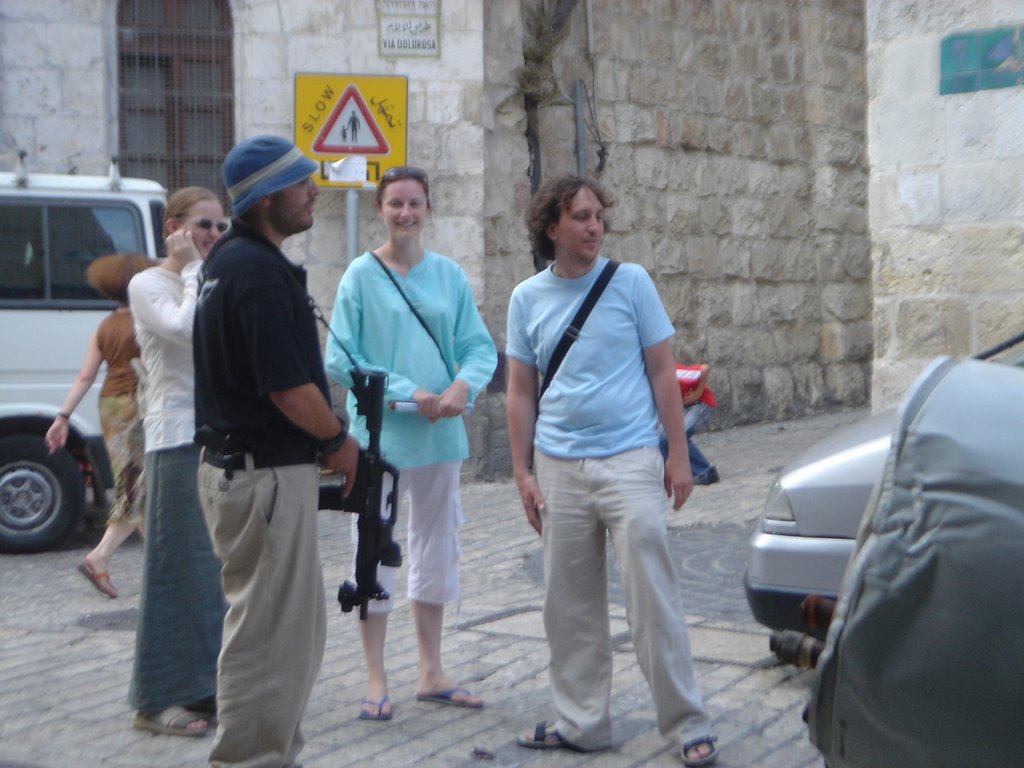
American Jews being 'protected' in the Muslim quarter of the Old City. Settlers living here never leave their home without their weapons.
Via Dolorosa in the background, like a painful reminder that not only Jesus suffered here. Who are they gonna shoot? And why?
Wednesday, July 05, 2006
Epilogue
So I am leaving. Daylight has taken the evening sun by its hand and left Jerusalem for now and so will I. When it returns I will be enjoying my breakfast high above the clouds. Northbound! Looking down on Earth, hoping the human beings down there will be a little bit more kind to eachother than yesterday - that is, today. And behind that again, the mirror of horror known as History, into which we constantly gaze, all the while still failing to recognize ourselves.
I will not say that I've had a great time here and that I'm sorry to leave, because that would not be true. To be honest I am rather eager to get out of this bloody place, although I can't say that I am sorry I came either. I've learnt a hell of a lot, I've met some extraordinary inspiring people and some completely mad ones, I've completed my interview schedule (save one), and I've grown stronger, wiser and more confident.
The last days have been great, although the circumstances that made them so enjoyable couldn't have been much worse. I've been spending most of my time, in between finishing off the last interviews, with two of the most fantastic and inspiring people walking on this planet; Mads Gilbert and Anna Mørseth. They're on their way to Gaza to work with the PRC (Palestinian Red Crescent, the eqivalent of the Redd Cross), to witness and to report, but so far Gaza remains completely sealed off, hermetically closed to everything not bearing the name IDF. They being stuck in Jerusalem, we shared some beautiful days - despite the fact that History was unfolding in highly troublesome ways in the background (and, as a matter of fact, in our midst). I am so thankful our ways crossed, although circumstances could have been merrier.
Mads and Anna I wish you all the best, and there is really nothing much to say.
May the world turn sane.
I will not say that I've had a great time here and that I'm sorry to leave, because that would not be true. To be honest I am rather eager to get out of this bloody place, although I can't say that I am sorry I came either. I've learnt a hell of a lot, I've met some extraordinary inspiring people and some completely mad ones, I've completed my interview schedule (save one), and I've grown stronger, wiser and more confident.
The last days have been great, although the circumstances that made them so enjoyable couldn't have been much worse. I've been spending most of my time, in between finishing off the last interviews, with two of the most fantastic and inspiring people walking on this planet; Mads Gilbert and Anna Mørseth. They're on their way to Gaza to work with the PRC (Palestinian Red Crescent, the eqivalent of the Redd Cross), to witness and to report, but so far Gaza remains completely sealed off, hermetically closed to everything not bearing the name IDF. They being stuck in Jerusalem, we shared some beautiful days - despite the fact that History was unfolding in highly troublesome ways in the background (and, as a matter of fact, in our midst). I am so thankful our ways crossed, although circumstances could have been merrier.
Mads and Anna I wish you all the best, and there is really nothing much to say.
May the world turn sane.
Sunday, July 02, 2006
Thank You, Gideon Levy!
While Israel continues to reject any of the diplomatic solutions set forth and promises to 'intensify' its action in Gaza to in order to 'release the captured soldier'; while hundreds of thousands of innocent civilians still lack access to water and electricity and 25 thousand might be forced to flee from their homes; while the US once again uses its veto power in the UN Security Council to make sure no resolution against Israel's outrageous behavior will get through; while the whole world is watching and disagreeing but refuses to act; there are some voices that dare to speak out. I strongly encourage you to read the Israeli journalist Gideon Levy's fierce, stark and heartfelt criticism of his own government; A Black Flag hangs over Gaza. What a relief to know there are some sane people in this world. May the world come to the same insights, may somebody listen, may somebody act, may there eventually be some justice in this incredibly unjust world.
Friday, June 30, 2006
On Peace and Power
I have a suggestion to make. It is a very serious one, and it comes from the bottom of my heart. The suggestion is that we stop use the word peace. I am starting to realize what a dangerous word it is. It is dangerous because it conceals more than it reveals. What is the meaning of peace, anyway? When somebody talks about peace, we tend to think in terms of happiness, friendship, white doves, singing birds, blooming flowers and the absence of war. When somebody says he wants peace, we thus naturally assume that he wants something good. And on that ground we conclude that we agree - after all, who doesn't want something good?
But who is to define what happiness is? And whose peace is to be implemented? The problem is that apart from denoting something good, the word peace has no specific meaning. It allows those using it to cover up hidden motives while pretending to work for the greater common good. Power can hide in the word peace.
I'll give you an example. Upon his return from his visit to Israel earlier this spring, Foreign Minister of Norway Jonas Gahr Støre was quoted in the paper Morgenbladet saying that although the situation in the Middle East didn't look too good, he was sure it would eventually come to some sort of a happy ending, seeing that 'both sides want peace'.
Now, this statement only serves to obscure reality. Both sides want to live in peace, for sure, in the sense that they want not to have to fear for their lives every single day. But there is a very important difference here. For most Israelis, the word peace equals security. As long as they have security, the rest of the matter is not so important. For Palestinians, on the other hand, the word peace means sovereignty and freedom. So when Støre is saying they both want peace, he is putting a veil over the truth, imposing a common goal on a situation where there is no common goal.
For this reason I suggest we limit our use of the word peace wherever and whenever we can. Let's try to be a little bit more honest, let's set our agendas straight. Let's try to be brave enough to face the world as it is, not as we would want it to be.
For my part, I will substitute 'peace' with justice. Working for peace can mean so many things, but working for justice has only one true meaning: the struggle for our equal rights and our indisputable dignity as human beings, on the basis of our common humanity.
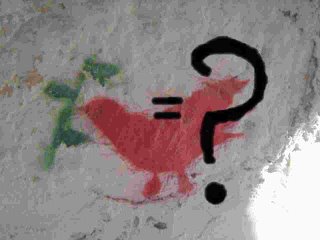
But who is to define what happiness is? And whose peace is to be implemented? The problem is that apart from denoting something good, the word peace has no specific meaning. It allows those using it to cover up hidden motives while pretending to work for the greater common good. Power can hide in the word peace.
I'll give you an example. Upon his return from his visit to Israel earlier this spring, Foreign Minister of Norway Jonas Gahr Støre was quoted in the paper Morgenbladet saying that although the situation in the Middle East didn't look too good, he was sure it would eventually come to some sort of a happy ending, seeing that 'both sides want peace'.
Now, this statement only serves to obscure reality. Both sides want to live in peace, for sure, in the sense that they want not to have to fear for their lives every single day. But there is a very important difference here. For most Israelis, the word peace equals security. As long as they have security, the rest of the matter is not so important. For Palestinians, on the other hand, the word peace means sovereignty and freedom. So when Støre is saying they both want peace, he is putting a veil over the truth, imposing a common goal on a situation where there is no common goal.
For this reason I suggest we limit our use of the word peace wherever and whenever we can. Let's try to be a little bit more honest, let's set our agendas straight. Let's try to be brave enough to face the world as it is, not as we would want it to be.
For my part, I will substitute 'peace' with justice. Working for peace can mean so many things, but working for justice has only one true meaning: the struggle for our equal rights and our indisputable dignity as human beings, on the basis of our common humanity.
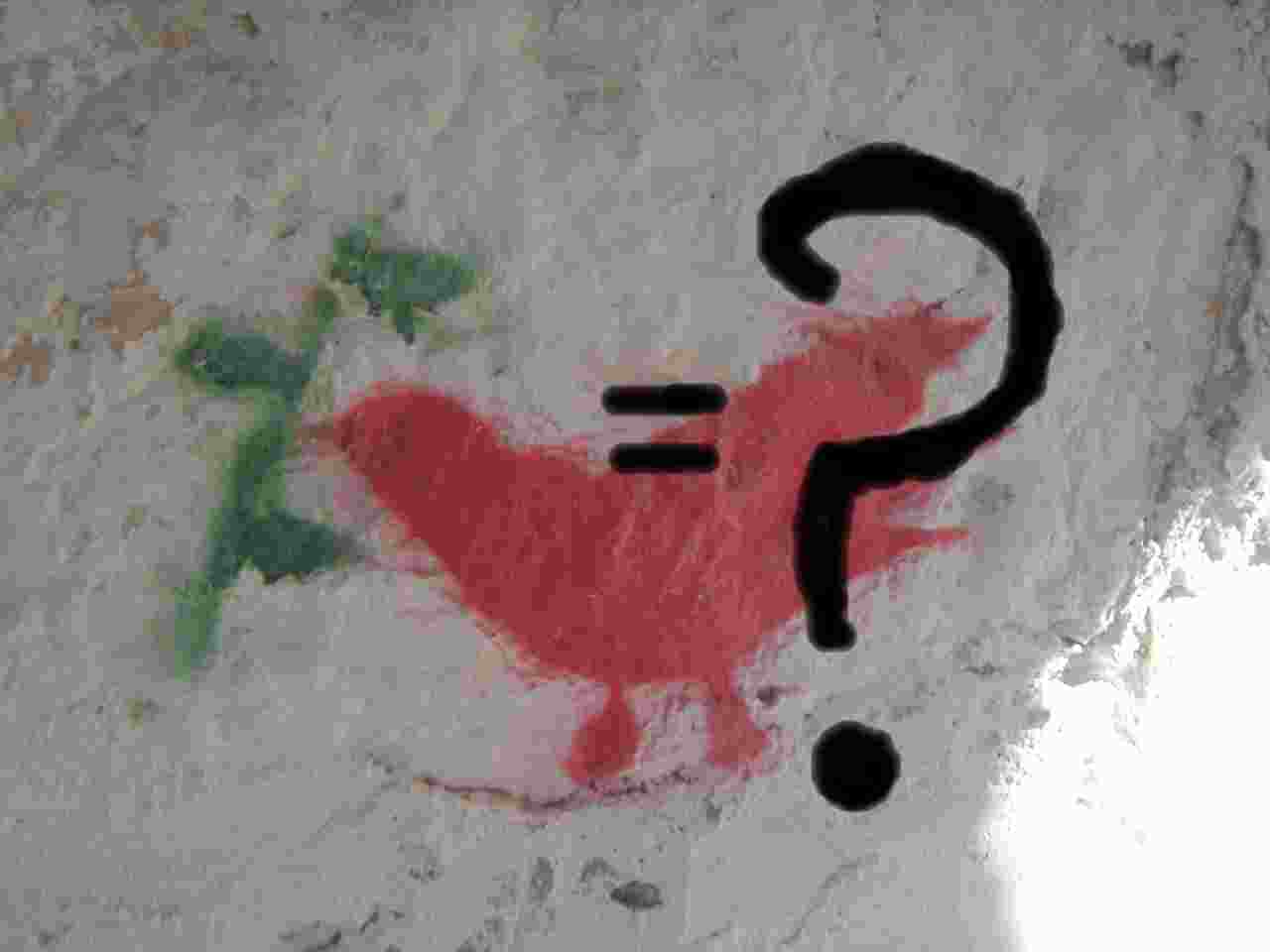
Under the Carpet
Jerusalem wakes up to yet another sunny day, and while everything seems normal here, in Gaza hell contiunes. Interior ministry bombed, rockets fired at Abbas' offices, water and electricity still gone, humanitarian crisis imminent. The world objects, the U.S. remains silent and nothing happens except for horror. Though Jerusalem is calm as yet I find it hard to concentrate on my project. It's so hard to believe that all this horror take place so close by, and even harder to realize that nobody cares. It's like being in the midst of a gruesome traffic accident where nobody comes to rescue, although everybody can see what happened. And at times it's also somewhat hard to be a visitor here, knowing that my mere presence in the country contributes to the tourist business in a state that doesn't give a damn about human rights and international law. When I think about it I feel like taking a taxi to the airport and leave promptly.
Instead I'll post some pictures from our trip around The Other Jerusalem, to the wall and the occupied Palestinian neighbourhoods that no Israeli visit unless he or she is already part of some activist group. The trip was organized by the organization Israeli Committee Against House Demolitions (ICAHD), who has been of great help to my project. Its founder, Jeff Halper, an extraordinary wise and courageous man as well as a brilliant academic, is now nominated for the Nobel Peace Prize together with a Palestinian named Ghassan Andoni.
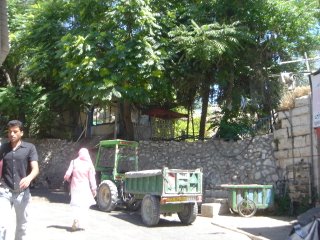 The invisible occupation. This picture says nothing an at the same time everything. It is taken in the Muslim part of the Old City. Tourists walk around here, it's nice and exotic, and it's hard to realize it belongs to the territories occupied in 1967. What is intersting with the picture is that the building in the background is part of an illegal settlement. Israeli flags (hardly visible on the photo) have been put up on what used to be Palestinian land. Impossible to know unless someone tells you.
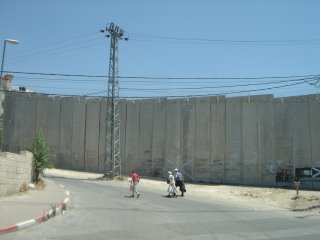 The Wall 5 minutes from central Jerusalem. Further to the right of the picture it cuts across what used to be a main street connecting East Jerusalem to the West Bank.
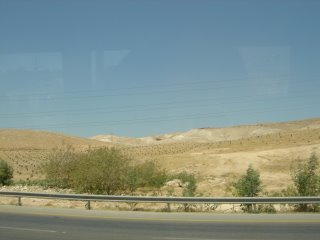 Uprooted olive trees on Palestinian land seen from the road. Olive trees belonging to Palestinian farmers are more often than not uprooted by Israel for 'security reasons', depriving their owners of their livelyhood.
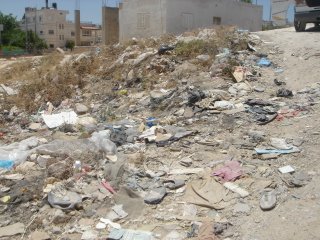 Garbage in the Palestinian neighbourhood of Anata. Although the inhabitants of Anata pay more tax to the Israeli state than residents in West Jerusalem (the Jewish part of the city), they are denied basic communal services such as garbage removal. For this reason garbage lie around everywhere, and the only way to get rid of it is by burning it.
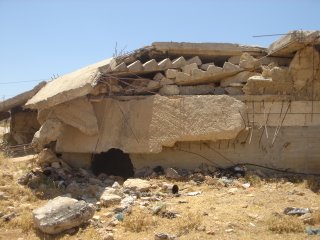 What used to be a home... A demolished house in Anata. The residents there live under a constant threat of house demolitions - leaving their home in the morning they can never be sure that it's there when they return. A family we had lunch with in Anata have had theirs demolished four times. They got 10 minutes to get out of the house before bulldozers ran over it. The last time the family's daughter went blind - her eyes simply couldn't bear it. Israel justifies such house demolitions on the ground that the houses are built illegally, i.e. without a building permit. However, a building permit is virtually impossible to obtain if you are Palestinian, even if the land is yours and it's regulated for housing. As a result many families are forced to build illegally in order to survive.
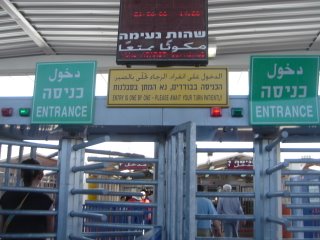 Qalandia checkpoint. What used to be a temporary checkpoint to enter the West Bank north of Jerusalem is now institutionalized - a whole terminal is built around it. The feeling I had at the mere sight of innocent civilians being lined up, forced to wait for no particular reason and humiliated by 18-year old soldiers is hard to put into words. Over the gate a friendly sign displaying a scrolling "Welcome" in three languages just encapsulated the cruelty of it all. We had to walk through four heavily guarded gates, in which children are often separated from their parents because of the requirement that one can enter only one by one. There is alot to say about the wall and the checkpoints, but its essence can be summarized thus: institutionalized violence. The imprisoning of human freedom.
This morning the IDF barred Palestinian residents of East Jerusalem - who carries Israeli ID cards and thus are to be counted as Israeli citizens - from using the Betlehem crossing, one of the main gates to the West Bank. The reason? Security. Of course. Those dangerous Palestinians can not be given permission to see their relatives.
Ok, I'll try to do some work now. If you're interested in first hand accounts of life under occupation, check out the journalist Laila El-Haddad's blog Raising Yousuf, linked on the right.
Peace out.
Instead I'll post some pictures from our trip around The Other Jerusalem, to the wall and the occupied Palestinian neighbourhoods that no Israeli visit unless he or she is already part of some activist group. The trip was organized by the organization Israeli Committee Against House Demolitions (ICAHD), who has been of great help to my project. Its founder, Jeff Halper, an extraordinary wise and courageous man as well as a brilliant academic, is now nominated for the Nobel Peace Prize together with a Palestinian named Ghassan Andoni.
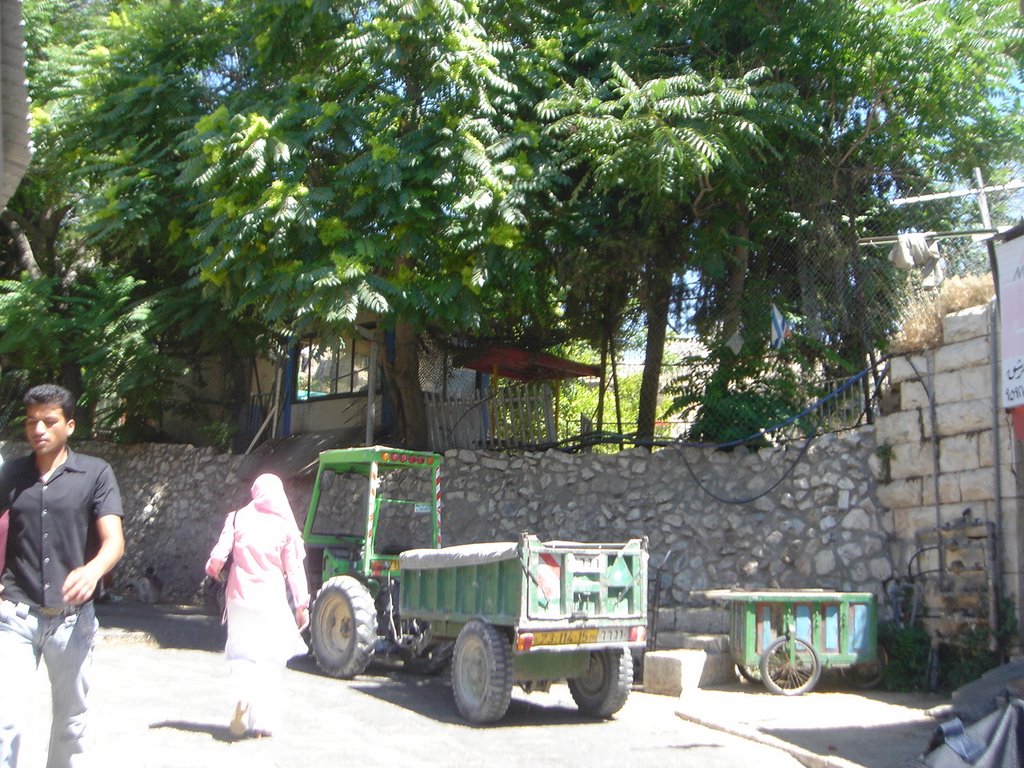 The invisible occupation. This picture says nothing an at the same time everything. It is taken in the Muslim part of the Old City. Tourists walk around here, it's nice and exotic, and it's hard to realize it belongs to the territories occupied in 1967. What is intersting with the picture is that the building in the background is part of an illegal settlement. Israeli flags (hardly visible on the photo) have been put up on what used to be Palestinian land. Impossible to know unless someone tells you.
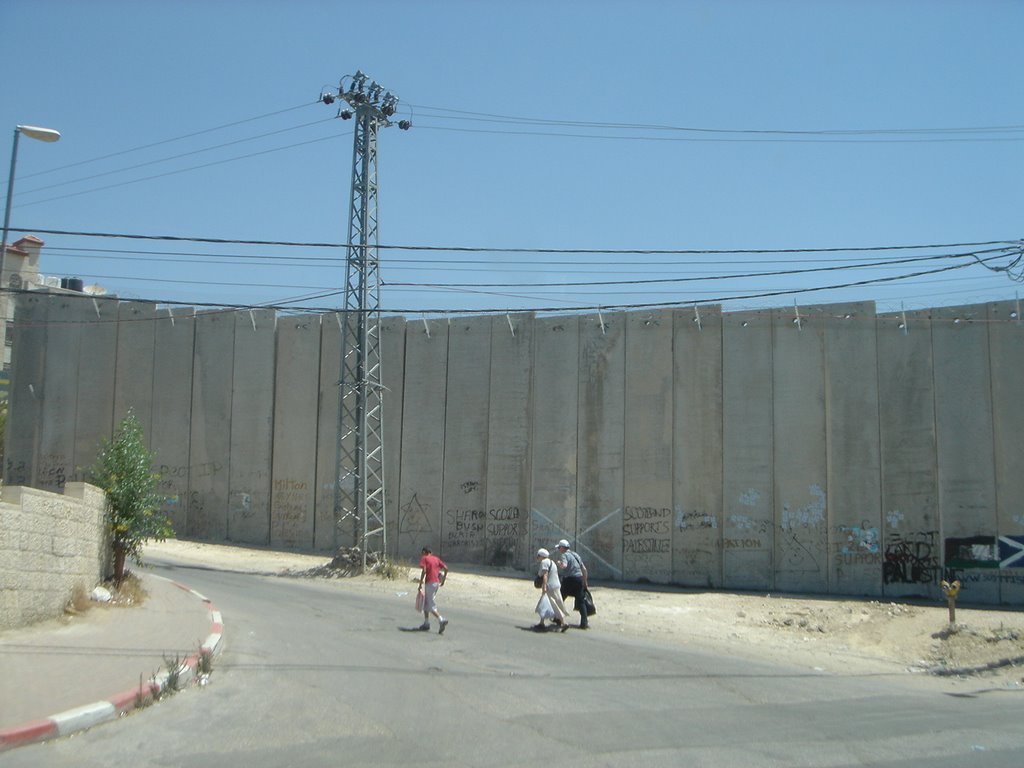 The Wall 5 minutes from central Jerusalem. Further to the right of the picture it cuts across what used to be a main street connecting East Jerusalem to the West Bank.
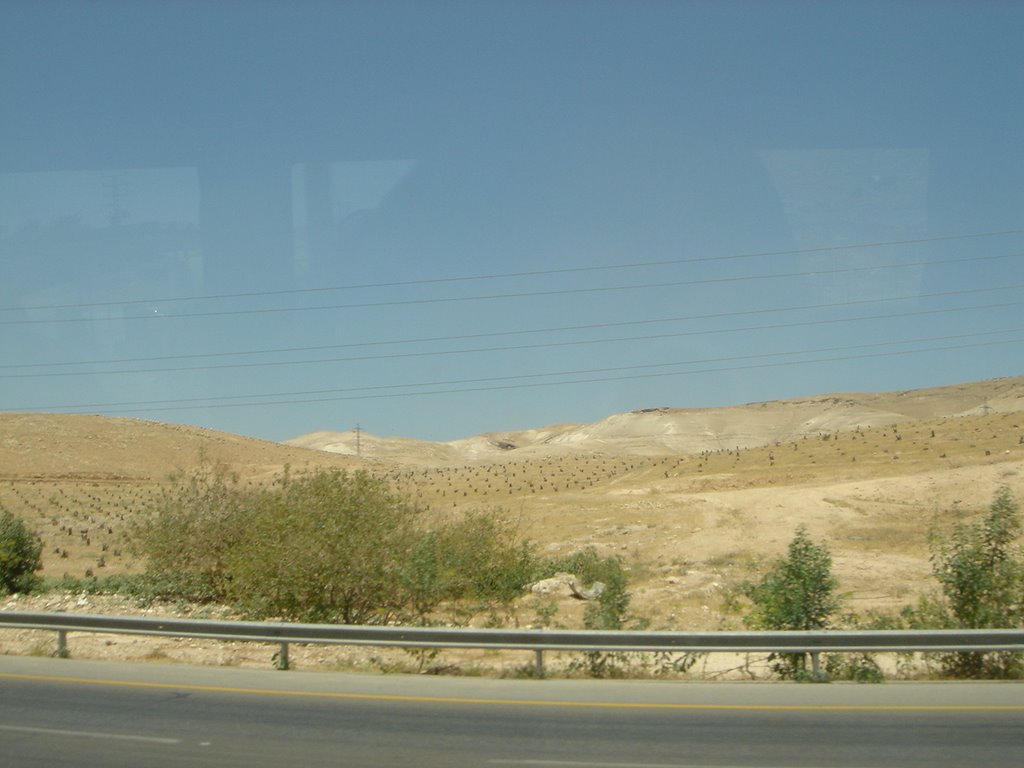 Uprooted olive trees on Palestinian land seen from the road. Olive trees belonging to Palestinian farmers are more often than not uprooted by Israel for 'security reasons', depriving their owners of their livelyhood.
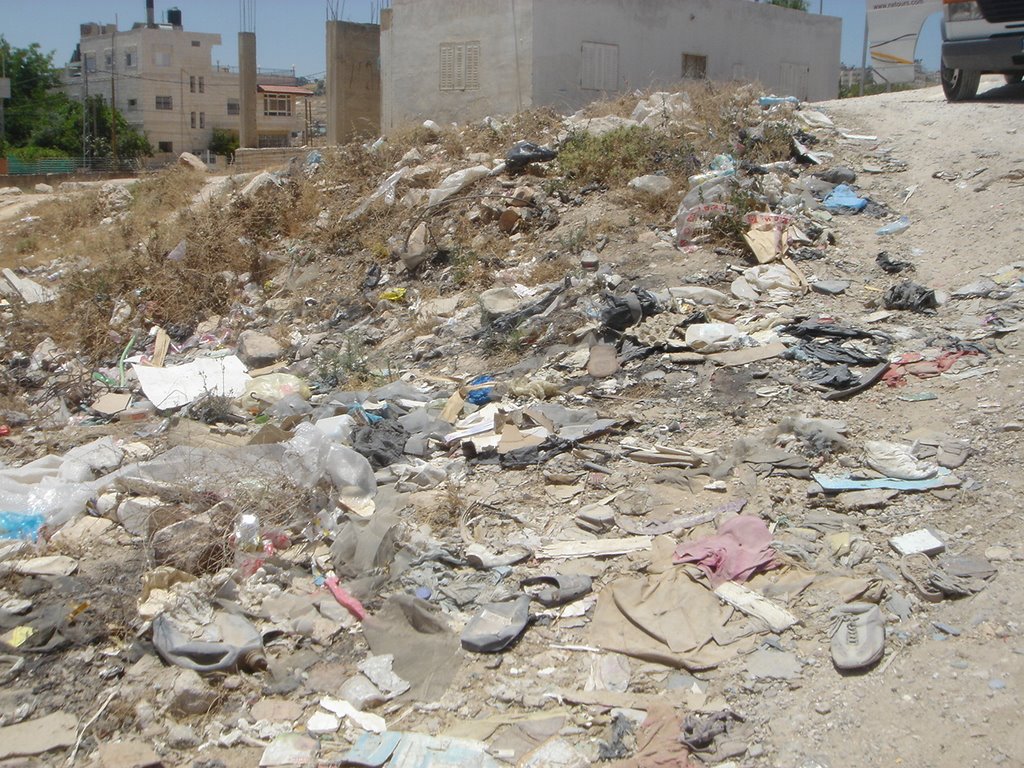 Garbage in the Palestinian neighbourhood of Anata. Although the inhabitants of Anata pay more tax to the Israeli state than residents in West Jerusalem (the Jewish part of the city), they are denied basic communal services such as garbage removal. For this reason garbage lie around everywhere, and the only way to get rid of it is by burning it.
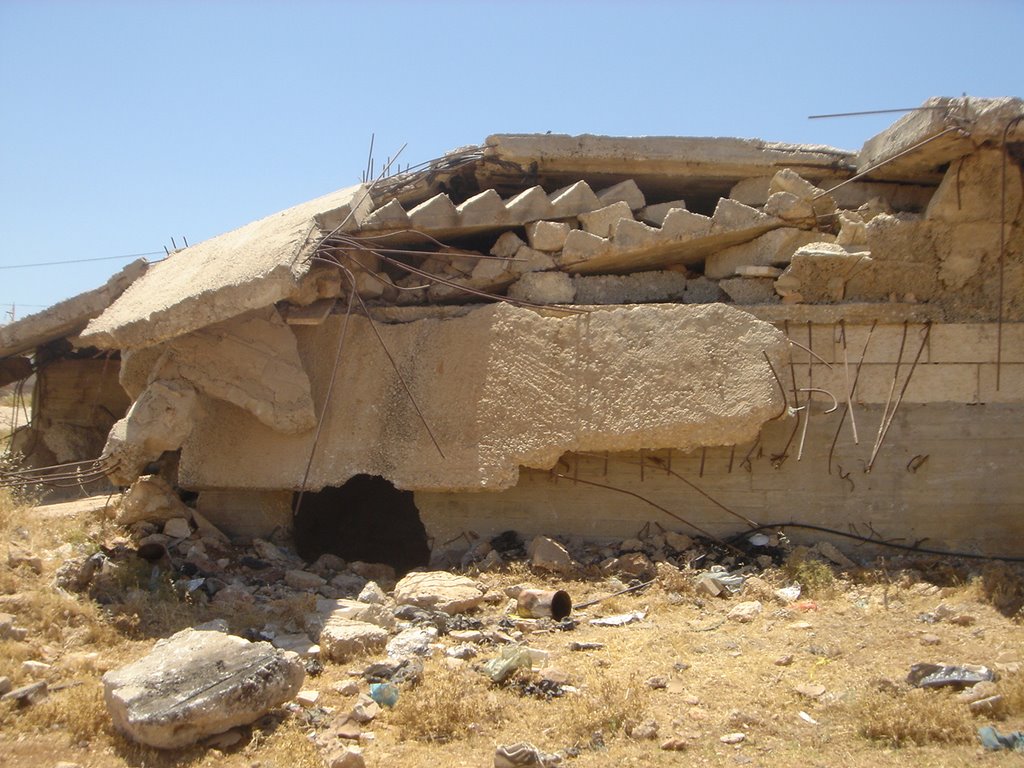 What used to be a home... A demolished house in Anata. The residents there live under a constant threat of house demolitions - leaving their home in the morning they can never be sure that it's there when they return. A family we had lunch with in Anata have had theirs demolished four times. They got 10 minutes to get out of the house before bulldozers ran over it. The last time the family's daughter went blind - her eyes simply couldn't bear it. Israel justifies such house demolitions on the ground that the houses are built illegally, i.e. without a building permit. However, a building permit is virtually impossible to obtain if you are Palestinian, even if the land is yours and it's regulated for housing. As a result many families are forced to build illegally in order to survive.
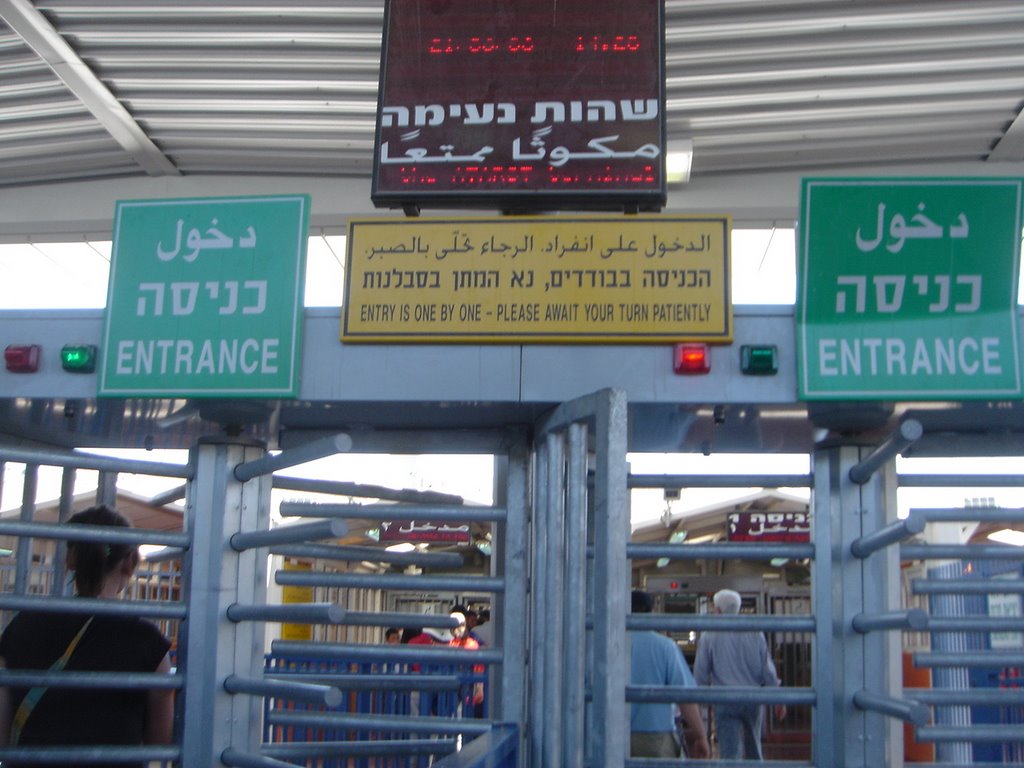 Qalandia checkpoint. What used to be a temporary checkpoint to enter the West Bank north of Jerusalem is now institutionalized - a whole terminal is built around it. The feeling I had at the mere sight of innocent civilians being lined up, forced to wait for no particular reason and humiliated by 18-year old soldiers is hard to put into words. Over the gate a friendly sign displaying a scrolling "Welcome" in three languages just encapsulated the cruelty of it all. We had to walk through four heavily guarded gates, in which children are often separated from their parents because of the requirement that one can enter only one by one. There is alot to say about the wall and the checkpoints, but its essence can be summarized thus: institutionalized violence. The imprisoning of human freedom.
This morning the IDF barred Palestinian residents of East Jerusalem - who carries Israeli ID cards and thus are to be counted as Israeli citizens - from using the Betlehem crossing, one of the main gates to the West Bank. The reason? Security. Of course. Those dangerous Palestinians can not be given permission to see their relatives.
Ok, I'll try to do some work now. If you're interested in first hand accounts of life under occupation, check out the journalist Laila El-Haddad's blog Raising Yousuf, linked on the right.
Peace out.
Thursday, June 29, 2006
Do you have a Gun?
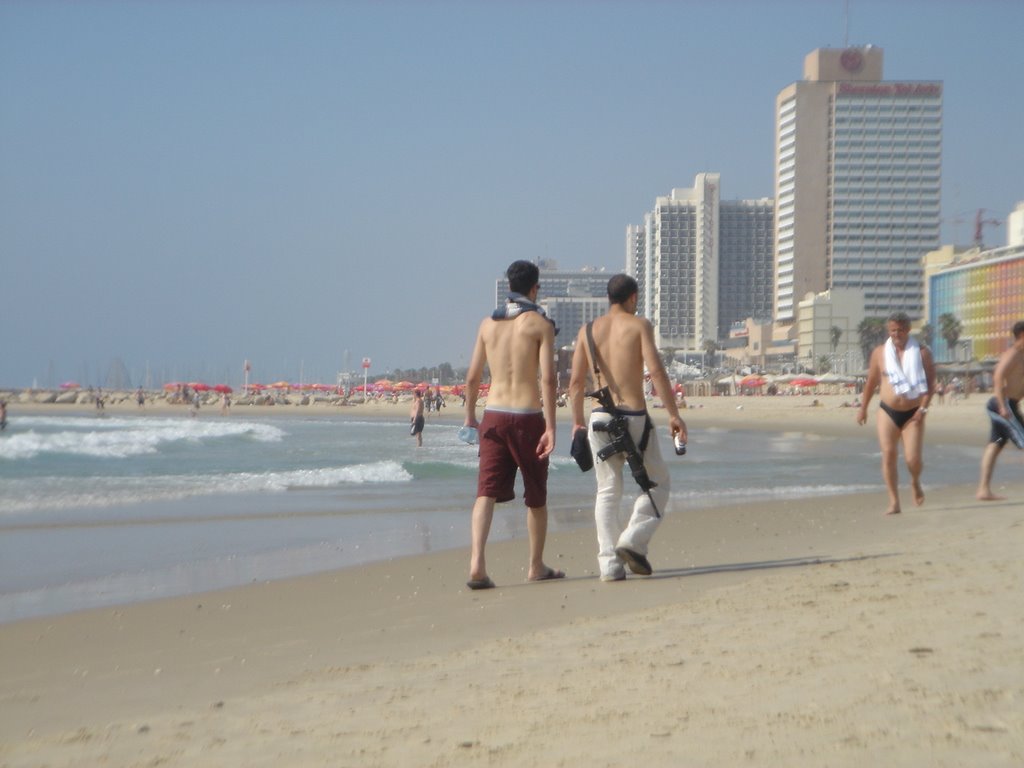
One feature of Israeli society serves as a more or less constant reminder that something is not as peaceful and harmonious as the immidiate surface will have it: wherever you go, you run into a rather sick obsession with security. Closely connected to that, ironically enough I would say, there is the widespread presence of guns and soldiers. Now, not only soldiers carry weapons around in the streets; ordinary civilians armed with a rifle is a common sight, the rifle usually hung over the shoulder with the same ease that I carry my bag around. There are security checks virtually everywhere; armed guards are placed outside shops, restaurants, bus stations, shopping centers and so on - not to mention holy places like the Wailing Wall - and you need to open your bag and let the guard look into it before entering. Some places you even have to send your belongings through x-ray machines, as when entering departure areas in airports. The funny thing is that carrying a weapon doesn't seem to be too much of a hinderance to be let through, and I don't really get the point as most of the time the guards don't care the least what's on the bottom of your bag. It should be rather easy to enter with a bomb hidden away somewhere, so what's the point?
 This morning I went to the Hebrew University in Jerusalem to meet with an interviewee who is studying there. Just the process of getting in to the campus was quite interesting. First I was stopped by two guards asking to see my ID, and so I had to give them my passport. The guard examined it closely and asked me some questions about where I was from, what I was doing and why I wanted to enter into the university campus. I told him I was there to see a friend, which was then judged as an acceptable reason to let me in. Then came the question: "do you have a gun?" - phrased in a tone so casual and at the same time so serious it almost made me laugh. Well, I was eventually let in - whether or not it had anything to do with the fact that I didn't have a gun remains unknown - only to be faced with yet another security check. This time with beeping gates and x-ray machines, but no further questions asked. All this just to get inside the main building of the faculty of social sciences.
Where fear reigns, 'security measures' is good business.
I guess it also facilitates control, seeing that a frightened public is also an easily manipulated one.
 This morning I went to the Hebrew University in Jerusalem to meet with an interviewee who is studying there. Just the process of getting in to the campus was quite interesting. First I was stopped by two guards asking to see my ID, and so I had to give them my passport. The guard examined it closely and asked me some questions about where I was from, what I was doing and why I wanted to enter into the university campus. I told him I was there to see a friend, which was then judged as an acceptable reason to let me in. Then came the question: "do you have a gun?" - phrased in a tone so casual and at the same time so serious it almost made me laugh. Well, I was eventually let in - whether or not it had anything to do with the fact that I didn't have a gun remains unknown - only to be faced with yet another security check. This time with beeping gates and x-ray machines, but no further questions asked. All this just to get inside the main building of the faculty of social sciences.
Where fear reigns, 'security measures' is good business.
I guess it also facilitates control, seeing that a frightened public is also an easily manipulated one.
Wednesday, June 28, 2006
Hope?
I was going to write a blog about hope. After all, that's what I'm trying to do here... focusing on hope. I'm interviewing people in the peace movement here in Israel, trying to find out what made these people break out of the official collective narrative, based as it is on myths that shape the mainstream interpretations of both past and current events and that thus make every peace process seem inconcievable. I'm talking to people who are objecting to it, trying to create an alternative viable framework of the conflict, one that focus less on 'security' and more on justice. What made them change, what made them realize that what's going on is unjust? I believe that this is where hope is. And I wanted to tell you about them, the small minority working hard to change the dangerous course of an overwhelming indifferent current. But in the face of a horrible invasion of an overpopulated impovered small strip of land, where people already are fighting hard for their daily lives, stripped of virtually every right theoretically entitled to all that fit the label 'human being' and even internationally boycotted on top of it all (!), how can I?
 Just kilometres away, Israeli tanks entered Gaza last night. Operation Summer Rain (what cruel brains are naming horror after beauty?) has begun. Electricity and water is cut off, bridges bombed, sonic booms dropped, everything explained by the need to rescue the Israeli soldier who was kidnapped on Sunday. Seeing that Israel has what is probably the best and most effective intelligence services in the world, the need for 'extreme actions' (as Olmert put it) to win the soldier back is somewhat hard to believe. Consider this: The state of Israel can track down a wanted high-ranking Palestinian leader in a matter of minutes and assassinate him on the spot if they so wish (the killings of several Hamas leaders in 2004 serves as a good example). They are able to do this because of the many desperate Palestinian informants that get assurance that their house will not be abolished or a permit to visit relatives in Israel proper as payment for information useful to Israel. Shin Bet was even able to sack a Palestianian teacher in an Arab village just because he had told his students about the PLO in the classroom one day (an act which was of course deemed highly illegal). It's virtually impossible to hide anything. And yet they are not able to locate a kidnapped soldier? Don't bullshit me. Why does the world believe this shit? How can the world let this happen? Why are nobody stopping it? When will the world realize that violence and force only reproduce violence and force?
I feel like paying Ehud Olmert a visit, I feel like picking up the phone and call The White House, I feel like running into the UN's General Assembly, anywhere where this God-stolen power is gathered, hands are shaken and nothing but top-salaries are improving, I want to rush in there, and scream.
A lone, loud, intolerable scream.
In the midst of silent dark suits and nicely decorated neckties.
Would somebody then understand?
Would somebody then care?
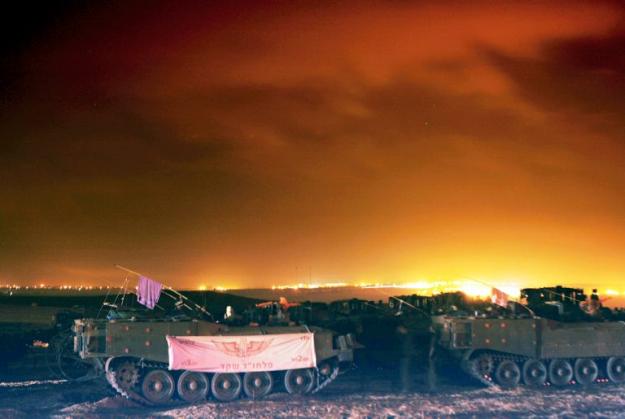 Just kilometres away, Israeli tanks entered Gaza last night. Operation Summer Rain (what cruel brains are naming horror after beauty?) has begun. Electricity and water is cut off, bridges bombed, sonic booms dropped, everything explained by the need to rescue the Israeli soldier who was kidnapped on Sunday. Seeing that Israel has what is probably the best and most effective intelligence services in the world, the need for 'extreme actions' (as Olmert put it) to win the soldier back is somewhat hard to believe. Consider this: The state of Israel can track down a wanted high-ranking Palestinian leader in a matter of minutes and assassinate him on the spot if they so wish (the killings of several Hamas leaders in 2004 serves as a good example). They are able to do this because of the many desperate Palestinian informants that get assurance that their house will not be abolished or a permit to visit relatives in Israel proper as payment for information useful to Israel. Shin Bet was even able to sack a Palestianian teacher in an Arab village just because he had told his students about the PLO in the classroom one day (an act which was of course deemed highly illegal). It's virtually impossible to hide anything. And yet they are not able to locate a kidnapped soldier? Don't bullshit me. Why does the world believe this shit? How can the world let this happen? Why are nobody stopping it? When will the world realize that violence and force only reproduce violence and force?
I feel like paying Ehud Olmert a visit, I feel like picking up the phone and call The White House, I feel like running into the UN's General Assembly, anywhere where this God-stolen power is gathered, hands are shaken and nothing but top-salaries are improving, I want to rush in there, and scream.
A lone, loud, intolerable scream.
In the midst of silent dark suits and nicely decorated neckties.
Would somebody then understand?
Would somebody then care?
Saturday, June 24, 2006
Inivisibilities, Wars and Blindness
Time passes, and so I am beginning to grasp parts of how reality reveals itself here in the holy land. I am starting to see how the surprisingly calm and peaceful surface that shocked me so much when I first arrived is not just a carpet hiding a much more cruel reality, but actually an important part of that cruel reality itself.
I should have guessed.
The opposite of love and empathy, after all, is not hatred but indifference.
It makes sense in some bizarre way.
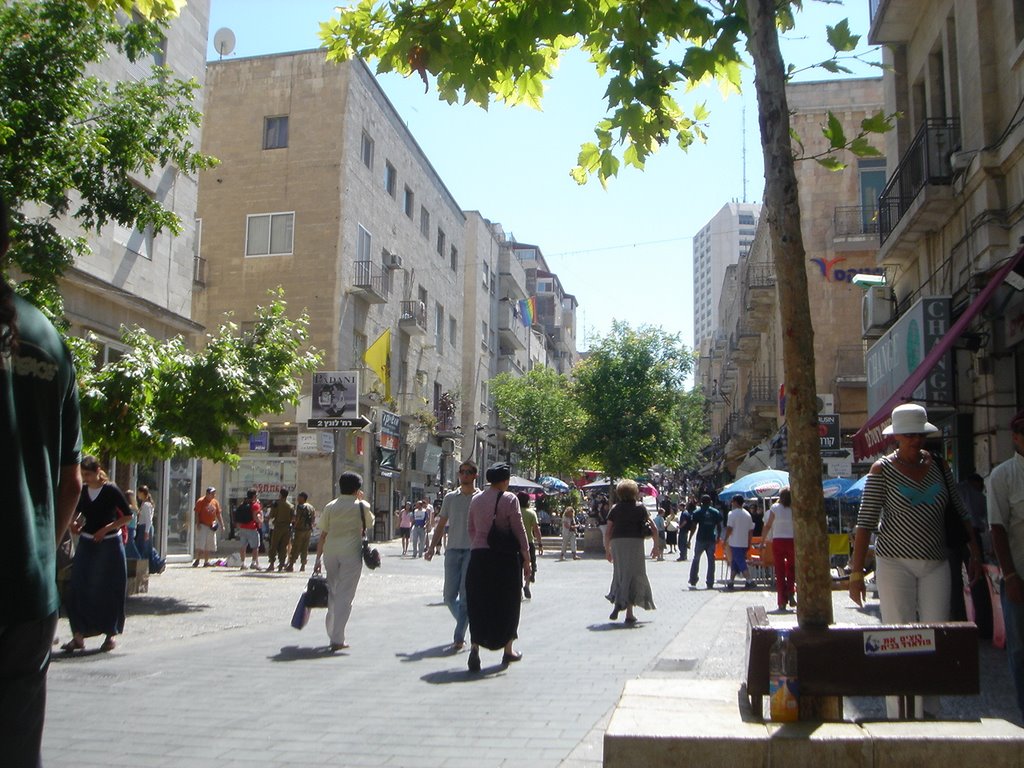
There is so much ignorance here, you wouldn't believe it. People are so blind. For most Israelis (and I am of course making broad generalizations here, but you get the point), the occupation is non-existent. And why is it non-existent? For the simple reason that it's invisible. Out of sight, out of mind. Although only kilometres away (or some places not even a kilometre), the general feeling is that it's at least as far to the territories (as the occupation is called most of the time) as it is to Norway ("Norway? What countries are next to Norway?" as a security guard at the wailing wall put it). You could perhaps arrest me for oversimplifying the matter, but this is even my own feeling here I am sitting in a nice wired café in West Jerusalem. The horror and daily humiliation of the occupation is far away. It must be far away, how else can I explain the indifference around me? How else can I explain the way people continue to be preoccupied by their investments, the latest fashion and the best drinks while their prime minister is planning a war on Gaza?
Again, there is some serious generalization here. But then again, walking by the beach in Tel Aviv yesterday, I rather unvoluntary was accompanied by a man who assured me he could tell me anything I wanted to know. Although this man was a bit... what can I say, off the mainstream in terms of intelligence, it serves as a good example of the general attitude around here. Noticing my Lonely Planet book of the Middle East he exclaimed "Oooohhh! Book about Middle East! Why you have book, I am here! I know everything! Ask me!" But then he asked me instead, wondering where I was from.
"Norway," I said.
"Ohhhhh!! Norway! Nice! I have very very nice memory of Norway!"
"Oh, so you've been there?"
"No!! Never!"
"?"
"But I have been to Greece!"
"???"
"I met nice girl in Greece! Her name Hilde! Ohhhh very beautiful you know! I love her! I love Norway!"
I guess I should have ended the conversation at this point, but I had nothing particular planned for the next minutes, so I went on to ask him what he thought about the conflict.
"Ohhh! About the conflict, I don't care! What do you think, you can tell me anything you think! Anything! I don't get angry, for me it means nothing!"
So I diplomatically told him I found the whole situation a bit... unequal.
"Ohh, unequal, really! But look, how can you say that! It's not all black and white you know! It is more like grey. Yeah grey! And when all is grey, what can I say! It's grey!"
And then he went on to complain about the stockmarket and his boredom on his day off and urged me to let him buy me a drink.
But I had just spent an hour talking to another jerk on the very same beach, patiently listening to his complaints about how all the Muslims of the world wanted to throw the Jews into the sea and all that (and in vain trying to put some other ideas into his brainwashed head), so I politely refused the invitation and decided to look for something more sane.
I expected to find so much hatred. I expected to find a war. I prepared for violence, that of the overt and direct kind. And I was shocked when I found a society where everything seemed completely unaffected by everything that's going on. I almost felt like my eyes betrayed me.
I still do, to some extent. It's difficult to believe how people can be so ignorant and indifferent to the cruel and racist policies their own government is implementing. Well, if its due to complete ignorance, in the sense that people don't have a clue about what's going on, it's somehow understandable. And truth is that their state is doing its best to hide the occupation from the public. For example, there are highways, 'safe passages', where Israelis can travel from one part of the country to another without having to get even a single glimpse of the wall. Or, where the roads run close to it, it's been decorated so that you don't even realize it's a wall unless you know that's what it is. I've seen it myself, I would never have guessed if the people from the oranization I travelled with hadn't pointed it out. But still, the great majority knows at least something; it's just so much more convenient to look another way.
So here I am, drinking coffee, transcribing and preparing interviews in my favorite Jerusalem cafe, life outside is as normal as that of Oslo on a summer's day (except for the rather common sight of civil men walking around with AG3's), and nobody would have guessed the wall is less than a 10 minutes drive away. I open Aftenposten's internet site and huge black fonts informs me that Israel is preparing for war.
War? What war?
For those who would take the effort to find out, they could buy a copy of Haaretz, Israel's biggest newspaper, or even just open their web page, and they could read that the IDF (Israel's Defence Forces) is preparing for an invasion of Gaza after an Israeli soldier was kidnapped yesterday, in a Hamas-led attack of a control post that came as a response to the killing of 30 Palestinian civilians during the last weeks. Citing prime minister Ehud Olmert:
"The age of restraint has come to an end... We will respond forcefully, with an operation that will last more than a day or two."
And nobody seems to care.
Fuck this cruel world.

I should have guessed.
The opposite of love and empathy, after all, is not hatred but indifference.
It makes sense in some bizarre way.
There is so much ignorance here, you wouldn't believe it. People are so blind. For most Israelis (and I am of course making broad generalizations here, but you get the point), the occupation is non-existent. And why is it non-existent? For the simple reason that it's invisible. Out of sight, out of mind. Although only kilometres away (or some places not even a kilometre), the general feeling is that it's at least as far to the territories (as the occupation is called most of the time) as it is to Norway ("Norway? What countries are next to Norway?" as a security guard at the wailing wall put it). You could perhaps arrest me for oversimplifying the matter, but this is even my own feeling here I am sitting in a nice wired café in West Jerusalem. The horror and daily humiliation of the occupation is far away. It must be far away, how else can I explain the indifference around me? How else can I explain the way people continue to be preoccupied by their investments, the latest fashion and the best drinks while their prime minister is planning a war on Gaza?
Again, there is some serious generalization here. But then again, walking by the beach in Tel Aviv yesterday, I rather unvoluntary was accompanied by a man who assured me he could tell me anything I wanted to know. Although this man was a bit... what can I say, off the mainstream in terms of intelligence, it serves as a good example of the general attitude around here. Noticing my Lonely Planet book of the Middle East he exclaimed "Oooohhh! Book about Middle East! Why you have book, I am here! I know everything! Ask me!" But then he asked me instead, wondering where I was from.
"Norway," I said.
"Ohhhhh!! Norway! Nice! I have very very nice memory of Norway!"
"Oh, so you've been there?"
"No!! Never!"
"?"
"But I have been to Greece!"
"???"
"I met nice girl in Greece! Her name Hilde! Ohhhh very beautiful you know! I love her! I love Norway!"
I guess I should have ended the conversation at this point, but I had nothing particular planned for the next minutes, so I went on to ask him what he thought about the conflict.
"Ohhh! About the conflict, I don't care! What do you think, you can tell me anything you think! Anything! I don't get angry, for me it means nothing!"
So I diplomatically told him I found the whole situation a bit... unequal.
"Ohh, unequal, really! But look, how can you say that! It's not all black and white you know! It is more like grey. Yeah grey! And when all is grey, what can I say! It's grey!"
And then he went on to complain about the stockmarket and his boredom on his day off and urged me to let him buy me a drink.
But I had just spent an hour talking to another jerk on the very same beach, patiently listening to his complaints about how all the Muslims of the world wanted to throw the Jews into the sea and all that (and in vain trying to put some other ideas into his brainwashed head), so I politely refused the invitation and decided to look for something more sane.
I expected to find so much hatred. I expected to find a war. I prepared for violence, that of the overt and direct kind. And I was shocked when I found a society where everything seemed completely unaffected by everything that's going on. I almost felt like my eyes betrayed me.
I still do, to some extent. It's difficult to believe how people can be so ignorant and indifferent to the cruel and racist policies their own government is implementing. Well, if its due to complete ignorance, in the sense that people don't have a clue about what's going on, it's somehow understandable. And truth is that their state is doing its best to hide the occupation from the public. For example, there are highways, 'safe passages', where Israelis can travel from one part of the country to another without having to get even a single glimpse of the wall. Or, where the roads run close to it, it's been decorated so that you don't even realize it's a wall unless you know that's what it is. I've seen it myself, I would never have guessed if the people from the oranization I travelled with hadn't pointed it out. But still, the great majority knows at least something; it's just so much more convenient to look another way.
So here I am, drinking coffee, transcribing and preparing interviews in my favorite Jerusalem cafe, life outside is as normal as that of Oslo on a summer's day (except for the rather common sight of civil men walking around with AG3's), and nobody would have guessed the wall is less than a 10 minutes drive away. I open Aftenposten's internet site and huge black fonts informs me that Israel is preparing for war.
War? What war?
For those who would take the effort to find out, they could buy a copy of Haaretz, Israel's biggest newspaper, or even just open their web page, and they could read that the IDF (Israel's Defence Forces) is preparing for an invasion of Gaza after an Israeli soldier was kidnapped yesterday, in a Hamas-led attack of a control post that came as a response to the killing of 30 Palestinian civilians during the last weeks. Citing prime minister Ehud Olmert:
"The age of restraint has come to an end... We will respond forcefully, with an operation that will last more than a day or two."
And nobody seems to care.
Fuck this cruel world.
Wednesday, June 21, 2006
Poetry Interlude
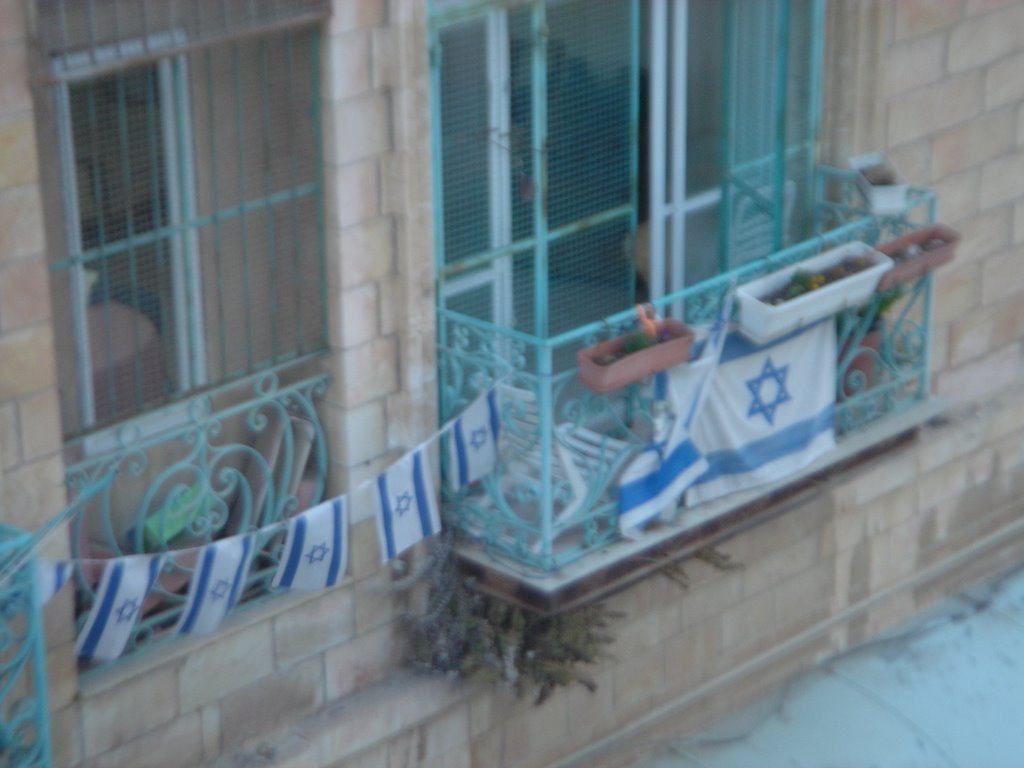
How Did a Flag
How did a flag come into being?
Let's assume that in the beginning
there was something whole, which was
then torn into pieces, both big enough
for two battling armies.
Or like the ragged striped fabric
of a beach chair of my childhood,
flapping in the wind. This
too could be a flag making you arise
to follow it or to weep at its side,
to betray it or to forget.
I don't know. In my wars
no flag-bearer marched in front
of the gray soldiers in clouds of dust and smoke.
I've seen things starting as spring,
ending up with hasty retreat
in pale dunes.
I'm far away from all that, like one
who in the middle of a bridge
forgets both its ends
and remains standing there
bent over the railing
to look down into the streaming water.
This too is a flag.
(Yehuda Amichai, Israeli poet)
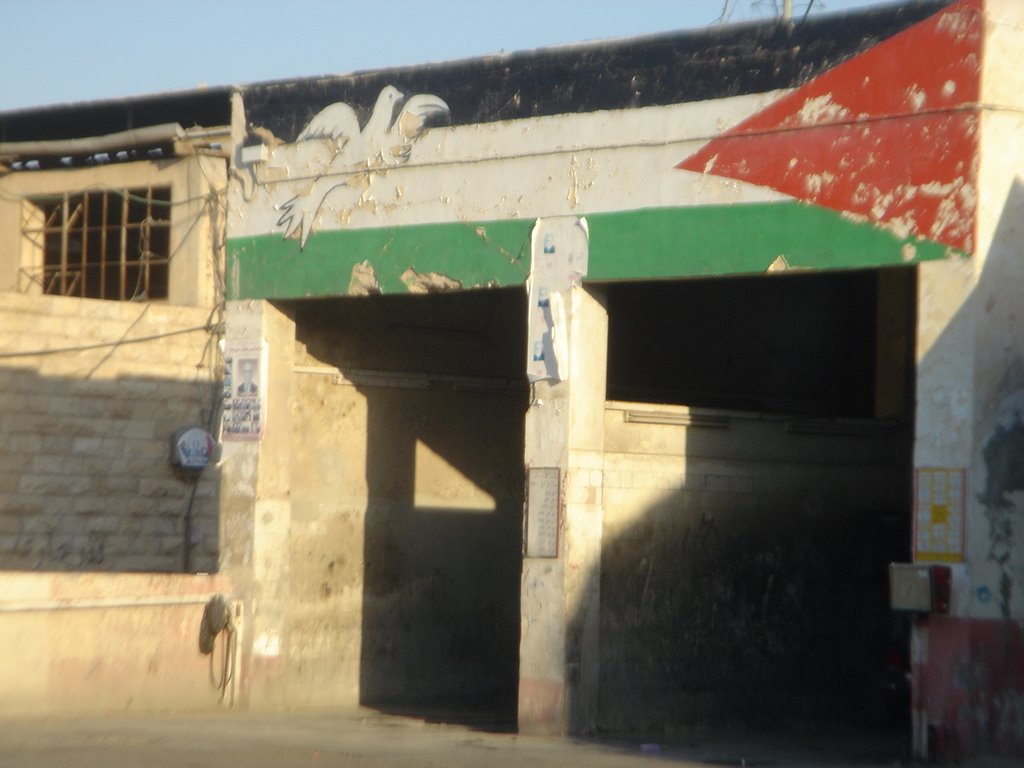
Subscribe to:
Posts (Atom)